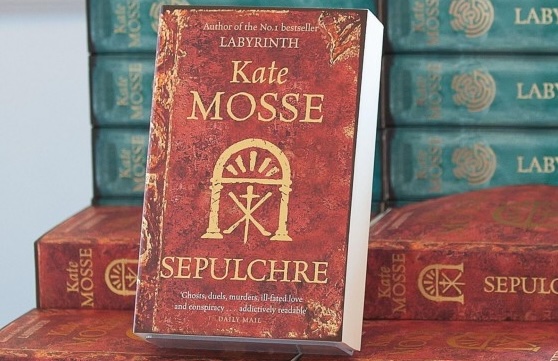
This is the fourth post in a series discussing where, how, and why tarot and fortunetelling show up as devices in literary fiction. In other words, they are an opportunity for a tarot-loving lit professor to indulge—with the ancient Sibyl’s permission, of course—two areas of passion and expertise. This week, we’ll be discussing Kate Mosse’s Sepulchre (2007). Be warned: spoilers await.
The introduction to the “Fortunetelling & Fiction” series is available at this link: https://sibylslab.com/2025/06/06/fortunetelling-fiction-a-new-series-on-tarot-as-a-literary-device/. And should you want a comprehensive sense of the journey ahead, this is an evolving list of texts to be discussed in some serendipitous order of Sibyl’s choosing. (Previously reviewed texts bolded in red.)
- “The Waste Land” by T.S. Eliot (1922)
- The Greater Trumps by Charles Williams (1932)
- The Castle of Crossed Destinies by Italo Calvino (1973)
- Last Call by Tim Powers (1992)
- Jonathan Strange & Mr. Norrell by Susanna Clarke (2004)
- Sepulchre by Kate Mosse (2007)
- The Tarot of Perfection by Rachel Pollack (2008)
- The Night Circus by Erin Morgenstern (2011)
- Arcanum by Simon Morden (2014)
- The Devourers by Indra Das (2015)
- The Tarot Sequence by K.D. Edwards (2018)
- Ninth House by Leigh Bardugo (2019)
- The Midnight Bargain by C.L. Polk (2020)
- The Tarot Cafe Series by Sang-Sun Park (2002-06)
- The Raven Cycle Series by Maggie Stiefvater (2012-16)
- The Diviners Series by Libba Bray (2012-20)
Sepulchre’s Tarot: From Plot Device to Literary Technique
Kate Mosse’s historical novel Sepulchre uses tarot as a sophisticated structural and thematic device, linking dual narratives set in 1891 and 2007 through more than mere temporal coincidence. The historical storyline follows Léonie Vernier, who discovers a strange tarot deck at her uncle’s estate in southern France, while the contemporary narrative follows Meredith Martin, researching a biography of Claude Debussy, who is drawn to the same location. This parallel structure immediately establishes tarot as the novel’s central organizing principle, creating what might be termed a “divinatory architecture” that governs both plot development and character revelation.
The tarot deck at the center of both stories contains unique cards that connect to local legends about demons and the supernatural, but Mosse’s treatment transcends simple gothic atmosphere. As both women conduct readings with this deck, they unlock secrets about the estate’s history and their own unexpected connections across time. The cards function as a form of literary palimpsest—each reading reveals new layers of meaning while preserving traces of previous interpretations. This creates a recursive narrative structure where past and present inform each other through the mediating symbolism of the cards.
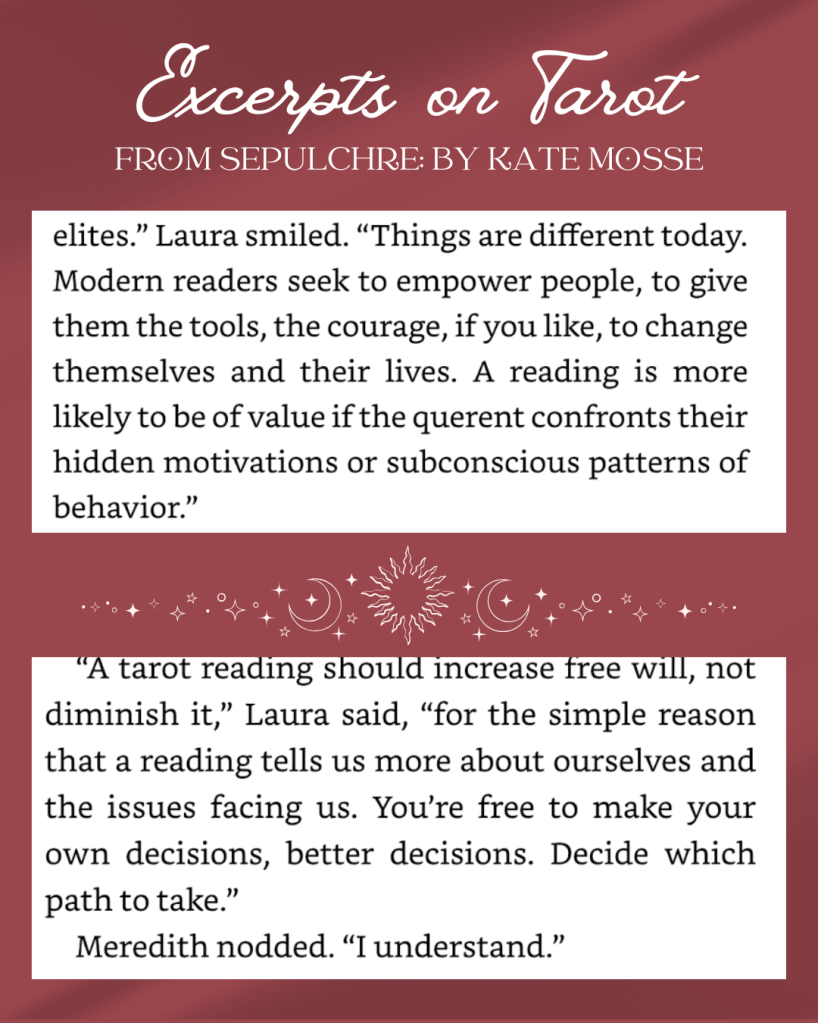
Mosse uses tarot to explore themes of history and inheritance with particular sophistication, positioning the cards as vessels that carry information across generations and reveal patterns that repeat through time. This reflects one of tarot’s actual functions—as a system for recognizing recurring archetypal situations in human experience—but Mosse extends this concept to examine how trauma, knowledge, and identity transmit across genealogical and cultural lines. The novel suggests that certain experiences create archetypal imprints that resurface cyclically, with tarot serving as both the mechanism of recognition and the key to breaking destructive patterns.
What distinguishes Mosse’s approach is how she integrates tarot into historical mystery without reducing it to mere plot device or supernatural gimmick. The cards function simultaneously as historical artifacts with their own provenance and as active tools that drive the investigation forward. This dual role highlights how tarot exists simultaneously as cultural object and interpretive system, but more significantly, it demonstrates Mosse’s understanding of how symbolic systems acquire power through use rather than inherent mystical properties.
The novel’s treatment of tarot also reflects broader literary concerns about the relationship between text and interpretation. Just as tarot readings depend on the interaction between fixed symbolic content and variable interpretive contexts, Mosse’s dual narrative structure suggests that historical meaning emerges from the dynamic relationship between past events and present understanding. The tarot readings become metacommentary on the act of historical research itself—both Léonie and Meredith are essentially “reading” the past, interpreting fragmentary evidence to construct coherent narratives about identity and inheritance.
Furthermore, Mosse’s choice to center the novel around female protagonists who are both seekers and interpreters aligns with feminist reclamations of traditionally marginalized forms of knowledge. The tarot deck represents an alternative epistemology—a way of knowing that privileges intuition, pattern recognition, and symbolic thinking over purely rational or empirical approaches. By making this alternative knowledge system central to uncovering historical truth, Mosse challenges hierarchies that privilege certain forms of evidence and interpretation over others.
The novel’s structure itself mirrors tarot’s non-linear temporality. Just as tarot readings can reveal connections between past, present, and future that exist outside chronological sequence, Sepulchre presents time as layered rather than linear. The 1891 and 2007 narratives don’t simply parallel each other; they intersect and inform each other in ways that suggest a more complex understanding of historical causation—one where meaning emerges through pattern and resonance rather than straightforward cause and effect.
The Sepulchre Tarot Spread
To demonstrate how deeply tarot structure permeates Mosse’s novel, we can construct a thematic spread that mirrors the book’s central concerns. This “Sepulchre Spread” uses seven cards arranged to reflect the novel’s exploration of inheritance, hidden knowledge, and temporal connection.
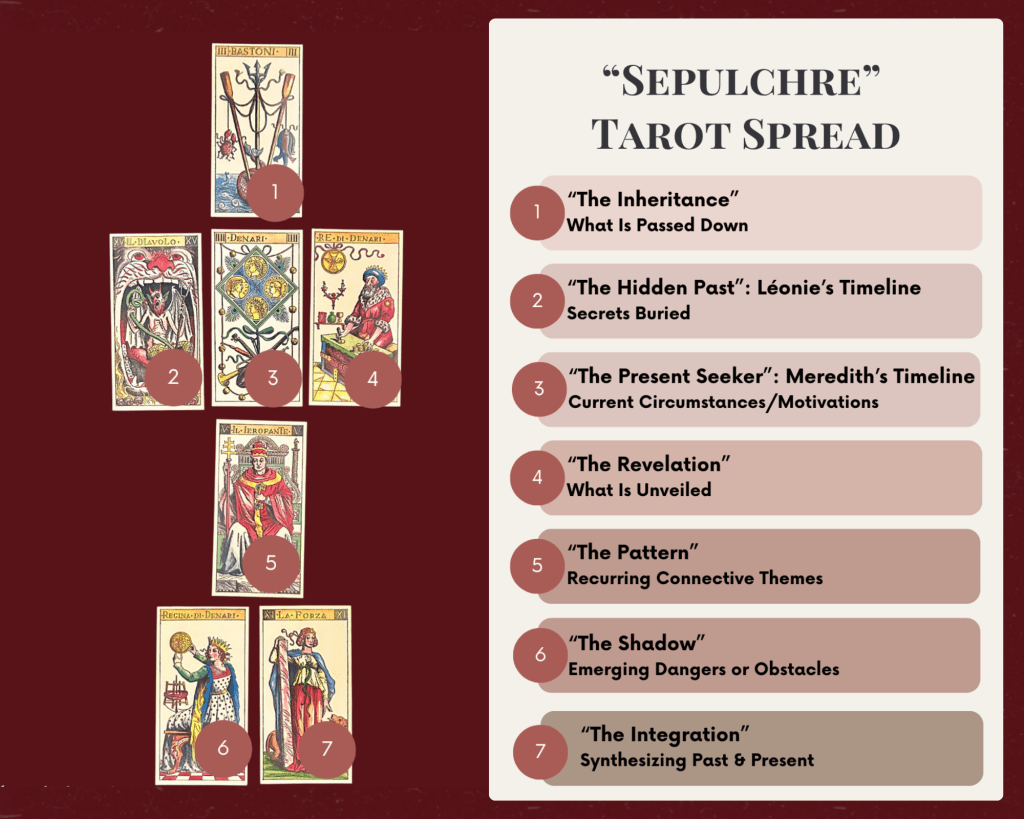
Card Positions:
- The Inheritance – What is passed down through generations
- The Hidden Past – Secrets buried in history (Léonie’s timeline)
- The Present Seeker – Current circumstances and motivations (Meredith’s timeline)
- The Revelation – What becomes unveiled through investigation
- The Pattern – Recurring themes that connect past and present
- The Shadow – Dangers or obstacles that emerge from disturbing the past
- The Integration – How past and present knowledge can be synthesized
This spread structure mirrors how Mosse organizes her dual narrative: the central vertical line (positions 1, 3, 5, 7) represents the through-line of inherited knowledge, while the horizontal positions (2, 4, 6) represent the specific manifestations in each time period. The pattern itself becomes a form of literary analysis, demonstrating how tarot’s structural logic can illuminate narrative architecture.
When applied to Sepulchre, this spread reveals how Mosse uses tarot not just as subject matter but as a compositional method—each chapter functions like a card position, contributing to an overall reading of history, identity, and the persistence of archetypal patterns across time.


Leave a comment