Welcome back to the Lab, where an ancient crone named Sibyl presides over two mouthy cartomancers and their endless supply of cards, questions, and irreverent commentary about both.
Picture this: A client sits across from you, eyes wide with hope and terror in equal measure. You flip the Tower card. Your mouth opens and out tumbles: “Your relationship is going to end. Probably next month. There’s nothing you can do about it.”
Congratulations. You’ve just committed tarot malpractice.
Now imagine instead you say: “The Tower suggests we’re looking at a structure in your life that might need to come down—or at least get seriously renovated. What in your relationship feels like it’s built on shaky ground? What would it look like to demolish the parts that aren’t serving you and rebuild something more solid?”
Same card. Completely different universe of possibility.
This is the difference between certainty and metaphor in tarot reading, and I’m here to tell you that one of these approaches will make you a better reader, a more ethical practitioner, and frankly, a lot less likely to screw up someone’s life. Spoiler alert: it’s not the certainty one.
The Seductive Danger of Playing Fortuneteller
Let’s talk about why certainty is so damn appealing in the first place. We live in a world that worships prediction. We want weather forecasts, stock market projections, and someone—anyone—to tell us what’s going to happen next. When someone comes to you for a tarot reading, they’re often drowning in uncertainty, and they want you to throw them a life preserver made of absolute answers.
The problem? That life preserver is actually an anchor.
The Ethical Minefield: When you deliver predictions as certainties, you’re making several dangerous assumptions. First, you’re assuming you have access to a fixed, predetermined future (which, philosophically speaking, is a hell of a claim). Second, you’re assuming your interpretation of the cards is the only correct one. Third—and this is the big one—you’re stripping your querent of their agency. You’re essentially saying: “This will happen to you, and you’re just along for the ride.”
Educational aside: The word “querent” comes from the Latin “quaerere,” meaning “to seek or ask.” It’s the traditional term for the person receiving a reading, and I use it because “client” feels too clinical and “customer” makes it sound like we’re selling used cars. A querent is someone on a quest for understanding, which is exactly what tarot should facilitate.
The Practical Problem: Here’s the thing about making definitive predictions: you’re going to be wrong. A lot. Not because tarot doesn’t work, but because life is complex, multifaceted, and influenced by about seventeen million variables including free will, other people’s choices, random chance, and whether Mercury is doing that thing again. When you’re wrong, you lose credibility. When you’re right, you might accidentally convince someone to make a terrible decision based on your “certainty” rather than their own wisdom.
The Disempowerment Factor: When you tell someone “You will meet a tall stranger in three months who will change your life,” you’ve just turned them into a passive character in their own story. They’re waiting for the tall stranger instead of actively creating the life they want. They’ve outsourced their decision-making to your interpretation of some cardboard rectangles with pretty pictures on them.
And look, I love these cardboard rectangles. But they’re not a substitute for personal agency.
What Metaphorical Reading Actually Means (And Why It’s Not Wishy-Washy)
So if we’re not fortune-telling, what the hell are we doing?
We’re reading symbols. We’re interpreting metaphors. We’re creating a space where the querent’s unconscious wisdom can bubble up and have a conversation with their conscious mind, mediated by archetypal imagery that humans have been using to make sense of existence since we first started drawing on cave walls.
Metaphorical reading means treating the cards as a symbolic language rather than a literal prediction machine. The Tower doesn’t mean “a building will fall down” or even necessarily “your relationship will end.” It means “we’re looking at themes of sudden change, necessary destruction, liberation through collapse, the clearing away of false structures, revelation of hidden foundations.”
Educational aside: Archetypes, a concept popularized by psychologist Carl Jung, are universal patterns of human experience that show up across cultures and throughout history. The tarot is essentially a portable archetypal library. The Fool’s journey, the Empress’s fertility, the Hermit’s solitude—these aren’t just random images. They’re symbolic representations of experiences and energies that every human recognizes at some level, even if they’ve never seen a tarot deck before.
When you read metaphorically, you’re asking: “What does this symbol illuminate about the querent’s situation? What patterns does it reveal? What possibilities does it suggest?” You’re not declaring what will happen; you’re exploring what’s happening, what could happen, and what the querent might want to make happen.
This approach requires you to know your symbolism deeply. You need to understand not just the basic meanings of the cards, but their mythological roots, their elemental associations, their numerological significance, and how they interact with each other in a spread. Metaphorical reading isn’t easier than fortune-telling—it’s harder. It requires more knowledge, more nuance, and more skill.
But it’s also infinitely more useful.
From Literal to Metaphorical: Practical Translation
Let’s get concrete. Here’s how you shift from certainty-based readings to metaphorical ones:
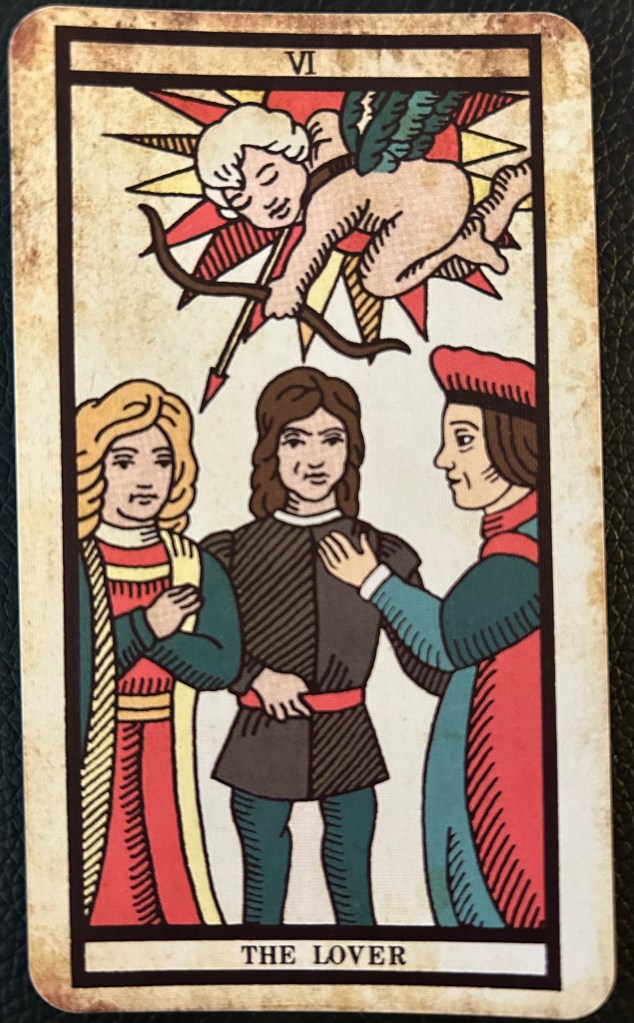
The Lovers:
- Literal/Certain: “You’ll meet your soulmate” or “You have to choose between two people”
- Metaphorical: “This card points to themes of choice, alignment, and integration. What values are you being asked to commit to? Where do you need to bring different parts of yourself into harmony? What relationship—with yourself, another person, or your work—needs attention?”
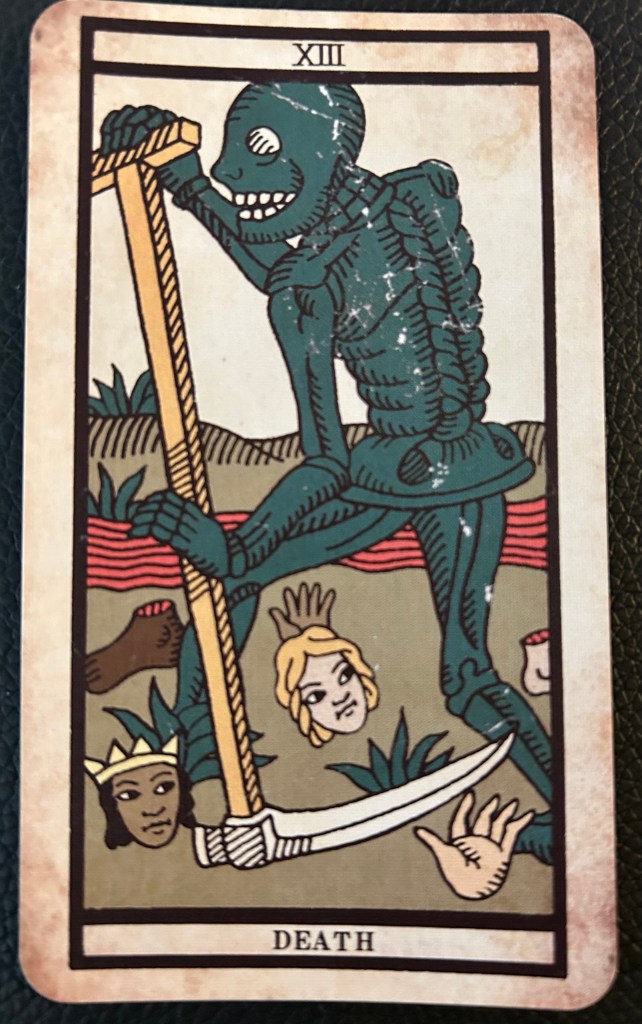
The Death Card:
- Literal/Certain: “Someone is going to die” or “Your job will end”
- Metaphorical: “We’re looking at a profound transformation. What in your life is ready to be composted so something new can grow? What identity or situation are you being called to release? Where do you need to practice the art of letting go?”
Ten of Swords:
- Literal/Certain: “You’re going to be betrayed” or “Complete disaster is coming”
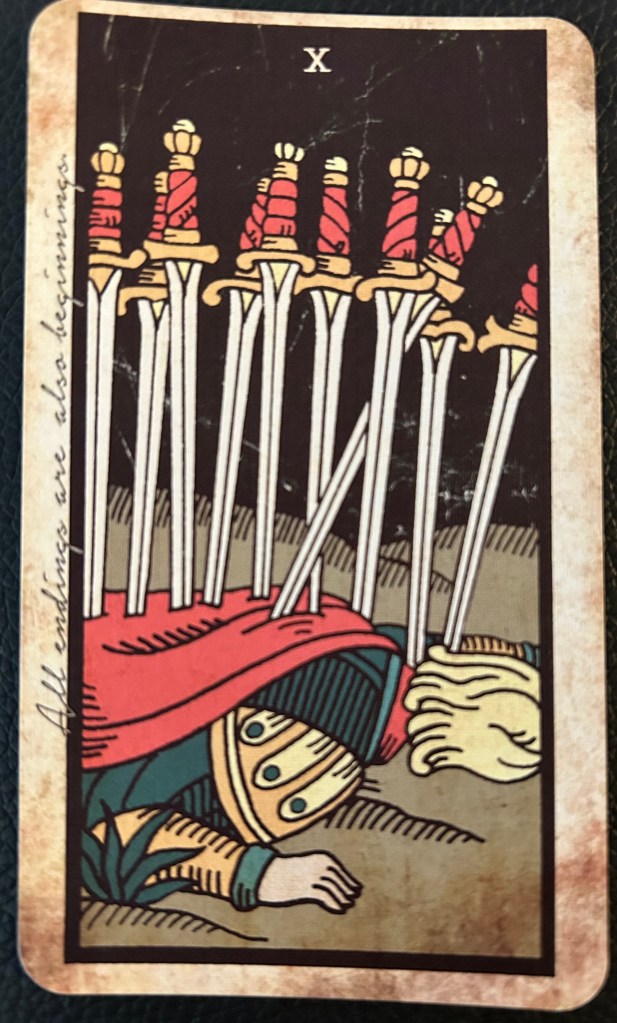
- Metaphorical: “This is the card of rock bottom, but also of the end of suffering. You can’t get more stabbed than this, which means the only direction is up. What painful cycle is finally ending? What dramatic conclusion needs to happen so you can start fresh? Where have you been martyring yourself?”
Notice how the metaphorical interpretations open up space for exploration, questioning, and agency? They’re not vague—they’re specific about themes and energies. But they’re not prescriptive. They invite the querent into a collaborative meaning-making process rather than delivering a verdict.
Why Metaphor is Actually More Powerful
Here’s the counterintuitive truth: metaphorical readings are more impactful than predictive ones.
They Activate the Querent’s Wisdom: When you ask “What does this mean for you?” instead of telling them what it means, you’re inviting them to access their own knowing. Often, the querent will immediately connect the card’s symbolism to something specific in their life that you couldn’t possibly have known about. That’s not you being psychic—that’s the cards creating a space for their unconscious knowledge to become conscious.
They’re Flexible and Responsive: Life changes. A metaphorical reading can evolve with the querent’s situation. If you told them “You’ll get the job,” and they don’t, the reading was wrong. If you explored themes of ambition, worthiness, and professional growth, those themes remain relevant regardless of whether this particular job comes through.
They Build Skills: Metaphorical readings teach querents how to think symbolically, how to recognize patterns, and how to work with archetypal energies. You’re not just giving them a fish; you’re teaching them to fish. (And then maybe teaching them about the symbolic significance of fish in various mythological traditions, because we’re nerds like that.)
They’re Ethically Sound: You’re not playing God or claiming to control the future. You’re offering insight, perspective, and a framework for understanding. That’s a service you can provide with integrity.
But Wait—Does This Mean Tarot Isn’t “Real”?
I hear this concern a lot, usually phrased as: “If we’re just reading metaphors, isn’t tarot just… made up? Just psychology? Just confirmation bias?”
And my answer is: Sure, maybe. And also, so what?
Educational aside: The “just psychology” dismissal always amuses me because psychology is the study of the human mind and behavior—literally the most complex system we know of in the universe. If tarot is “just” a tool for accessing psychological insight, that’s not a limitation. That’s incredible.
Here’s the thing: whether tarot works through divine intervention, quantum entanglement, synchronicity, the collective unconscious, or your brain’s pattern-recognition software doesn’t actually matter for practical purposes. What matters is: does it provide useful insight? Does it help people understand their situations more clearly? Does it facilitate growth, healing, and better decision-making?
In my experience, yes. Consistently. Regardless of the metaphysical mechanism.
Metaphorical reading doesn’t require you to abandon your beliefs about how tarot works. If you believe the cards are guided by spirit, great—maybe spirit speaks in metaphors. If you think it’s all psychology, cool—metaphors are how the psyche communicates. If you’re agnostic about the whole thing, perfect—metaphors work regardless.
The point is that metaphorical interpretation is compatible with any belief system about tarot’s mechanism, while certainty-based prediction requires you to make some pretty bold claims about the nature of reality, time, and causation.
The Metaphor Over Certainty Spread
Alright, let’s get practical. Here’s a spread I designed to help you practice shifting from literal to metaphorical thinking. Use this when you’re working on developing your symbolic interpretation skills, or when you catch yourself slipping into fortune-teller mode.
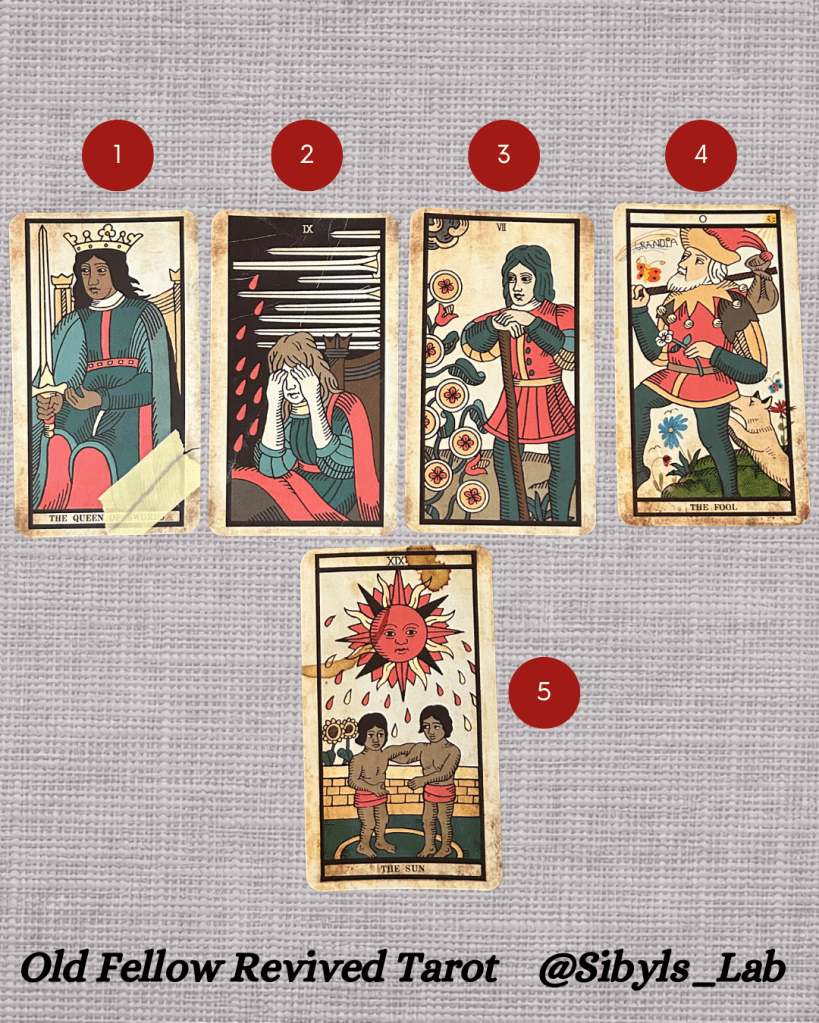
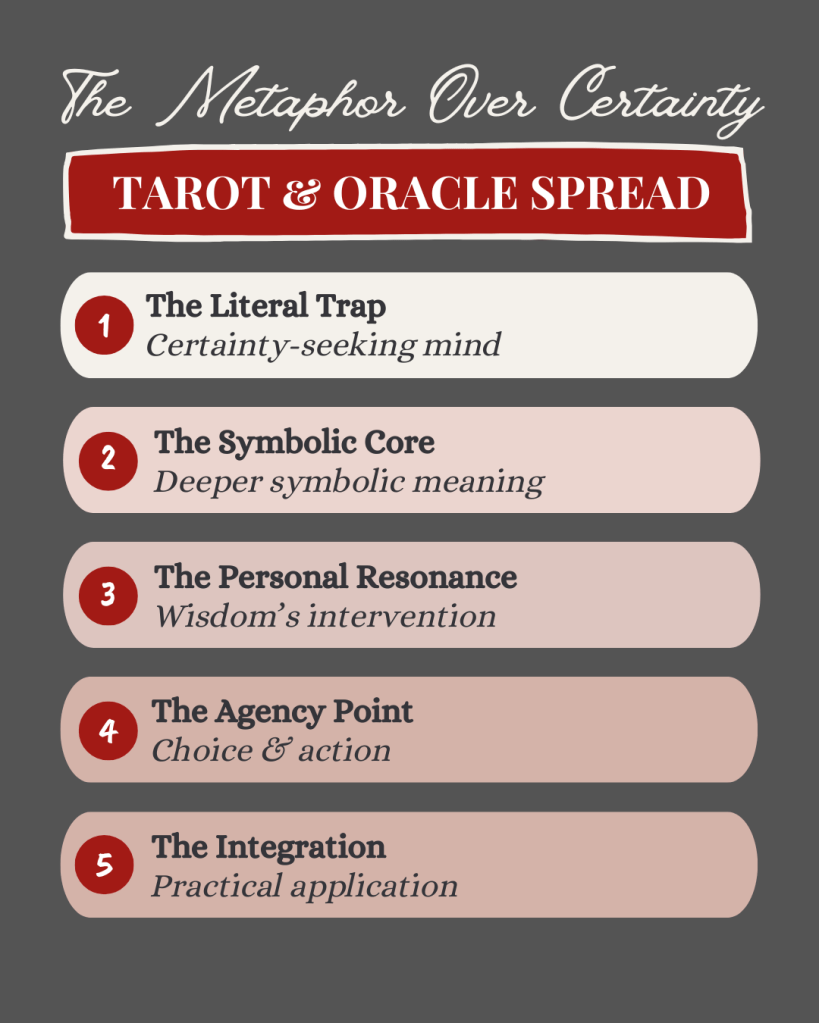
Position 1 – The Literal Trap: What am I tempted to read literally or predictively? This card shows you where your certainty-seeking mind wants to go.
Position 2 – The Symbolic Core: What is the essential metaphor or archetype at play here? This card points you toward the deeper symbolic meaning.
Position 3 – The Personal Resonance: How does this metaphor specifically apply to my situation? This is where the querent’s wisdom enters the conversation.
Position 4 – The Agency Point: What power do I have in relation to this energy? This card emphasizes choice and action rather than passive prediction.
Position 5 – The Integration: How can I work with this metaphor moving forward? This is your practical application—the “so what do I actually do with this information?” card.
Try this spread on yourself first. Pull cards for a situation where you’re tempted to want definitive answers. Notice how the spread structure itself guides you away from “what will happen” and toward “what does this mean and what can I do with it.”
The Bottom Line
Certainty is seductive. Metaphor is powerful.
Certainty makes you feel like you have control. Metaphor gives your querent actual agency.
Certainty might make you sound impressive at parties. Metaphor will make you a better reader, a more ethical practitioner, and someone who actually helps people navigate life’s beautiful, messy complexity.
The cards are not a crystal ball. They’re a mirror, a map, a conversation starter, a symbolic language for discussing the ineffable. They’re a bridge between the spiritual and the mundane, between the unconscious and conscious, between where we are and where we might go.
Treat them as such. Read the metaphors. Honor the symbols. Trust your querents to know their own lives better than you ever could.
And for the love of all that’s holy, stop telling people their relationships are definitely going to end next month.
Unless, of course, the metaphor of ending is exactly what they need to hear to finally make the change they’ve been avoiding. But that’s different. That’s not prediction—that’s permission.
And that’s what good tarot reading actually offers: not certainty about the future, but clarity about the present and permission to create the future you actually want.
Now go forth and read some cards. Metaphorically.
This way of working is something we practice more deliberately in our workshops.

 Sibyl's Lab of Cartomantics
Leave a comment