This week, in the spirit of doing what I (claim to) do best, I’ll be a bit more musing on myth and archetype. More specifically, let’s explore an archetype that is embodied throughout the Tarot, most traditionally in the Magician. And should you prefer some visual aids on myth and Tarot, do check out this YouTube playlist.
There exists, in the shadowy margins of human storytelling, a figure who appears again and again: the guide who stands at thresholds, who knows the way through darkness, who accompanies souls across the most profound boundary of all—the passage between life and death, between one state of being and another. This is the psychopomp, from the Greek psychopompos, meaning “guide of souls.” Neither fully of this world nor the next, the psychopomp inhabits liminal spaces: twilight rather than noon, crossroads rather than straight paths, doorways rather than rooms. To understand this archetype is to understand something essential about how humans navigate transformation, loss, and the terrifying beauty of change.
Ancient Guides: Psychopomps in Folklore and Mythology
The psychopomp is among humanity’s oldest archetypal figures, appearing in mythologies across the globe with remarkable consistency. In Greek tradition, Hermes—fleet-footed messenger god with his winged sandals and caduceus—served as the conductor of souls to the underworld, moving freely between the realm of the living and the domain of Hades. His Roman counterpart Mercury carried the same function, embodying the necessary swiftness and boundary-crossing nature of the guide who can traverse worlds. These gods were not merely death figures; they were mediators, translators, escorts through the unknown.
In Egyptian mythology, the jackal-headed Anubis presided over the weighing of hearts and guided the deceased through the Duat, the treacherous underworld. His animal form is significant—psychopomps frequently appear as creatures rather than humans, perhaps because animals seem to possess knowledge beyond human understanding, moving through territories we cannot access. The raven, that black-winged prophet, serves as psychopomp in Celtic and Norse traditions, associated with the Morrígan and Odin respectively. These birds, comfortable with carrion and capable of flight, bridge earth and sky, life and death. (Tarot decks pictured: Rider-Waite Smith Centennial, Boadicea, and Druidcraft.)
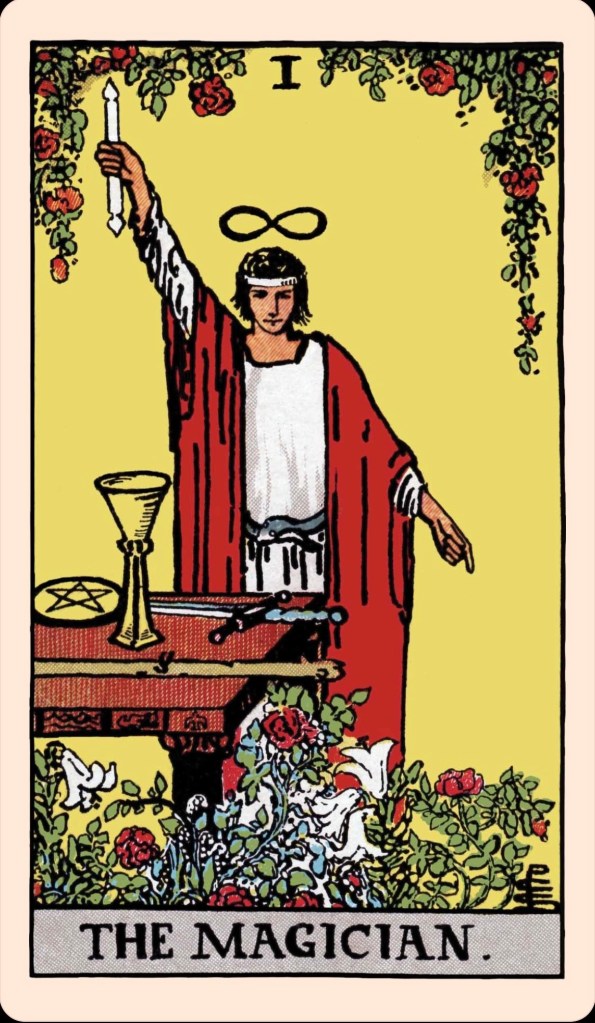
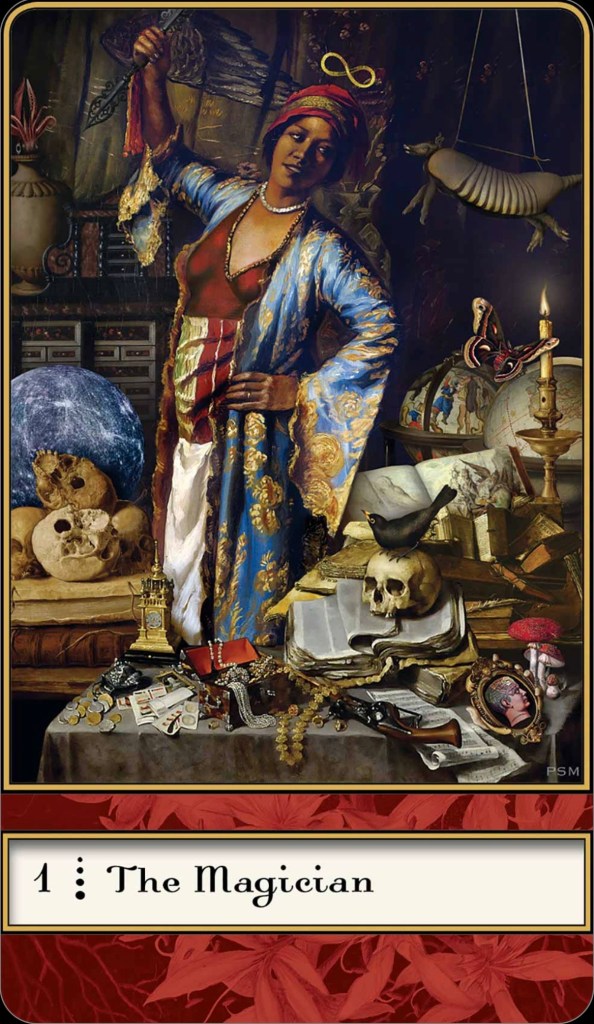
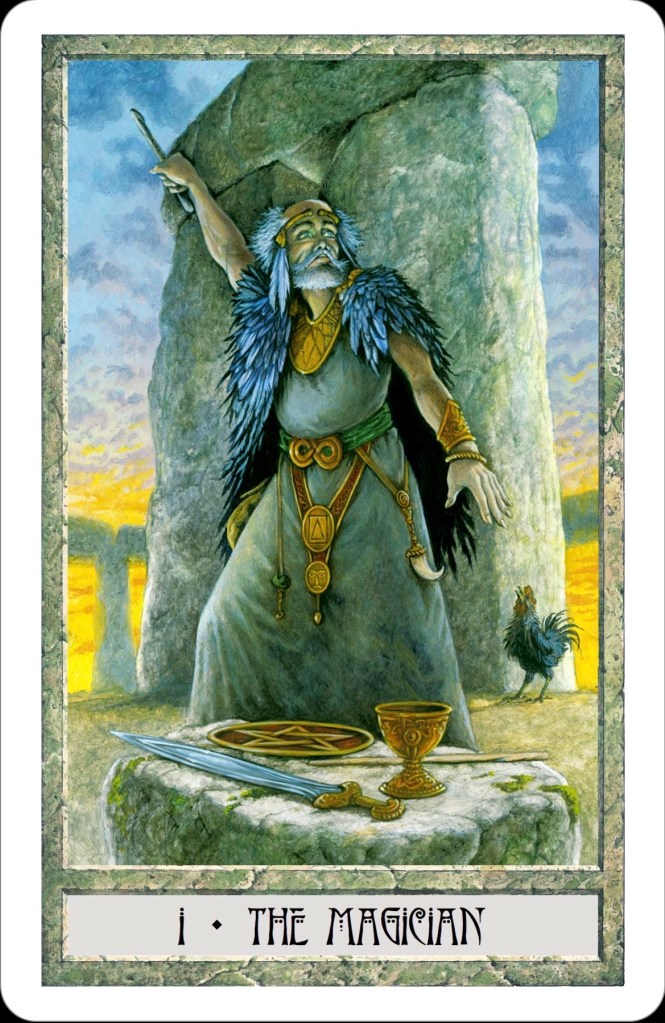
The black dog appears throughout British and European folklore as a spectral guide, sometimes ominous, sometimes protective, but always appearing at moments of transition—before deaths, at crossroads, during journeys. And then there is Charon, the ferryman of Greek myth, who for a coin transports souls across the river Styx. The ferryman figure recurs across cultures: someone who knows the way across uncrossable waters, who possesses the vessel and the knowledge to navigate between shores. These figures share essential qualities: they appear at thresholds, they possess specialized knowledge of passage, and they are fundamentally liminal beings, belonging fully to neither realm they connect.
Fairy Tale Guides: Psychopomps in Story
Fairy tales, those repositories of archetypal wisdom, are rich with psychopomp figures, though they often appear in gentler guises than their mythological counterparts. The wise old woman who appears when the protagonist is lost in the forest, offering cryptic advice and magical objects, serves a psychopomp function—she guides the hero through a transformative journey that is, symbolically, a kind of death and rebirth. Baba Yaga, that ambiguous crone of Slavic tales, lives at the forest’s edge in her chicken-legged hut, testing those who seek her wisdom. She devours some visitors and aids others, embodying the psychopomp’s dual nature: dangerous yet necessary, deadly yet life-giving.
Animal guides proliferate in fairy tales: the fox who leads the lost child, the bird who warns the princess, the wolf who, despite his fearsome reputation, sometimes shows the way. These creatures possess knowledge the human protagonist lacks—they can navigate the enchanted forest, understand the language of magic, perceive what human eyes cannot see. They appear at moments of crisis and transition, when the protagonist must move from innocence to experience, from one identity to another. (Tarot decks pictured: Holy Light, Shadowscapes, Enchanted.)
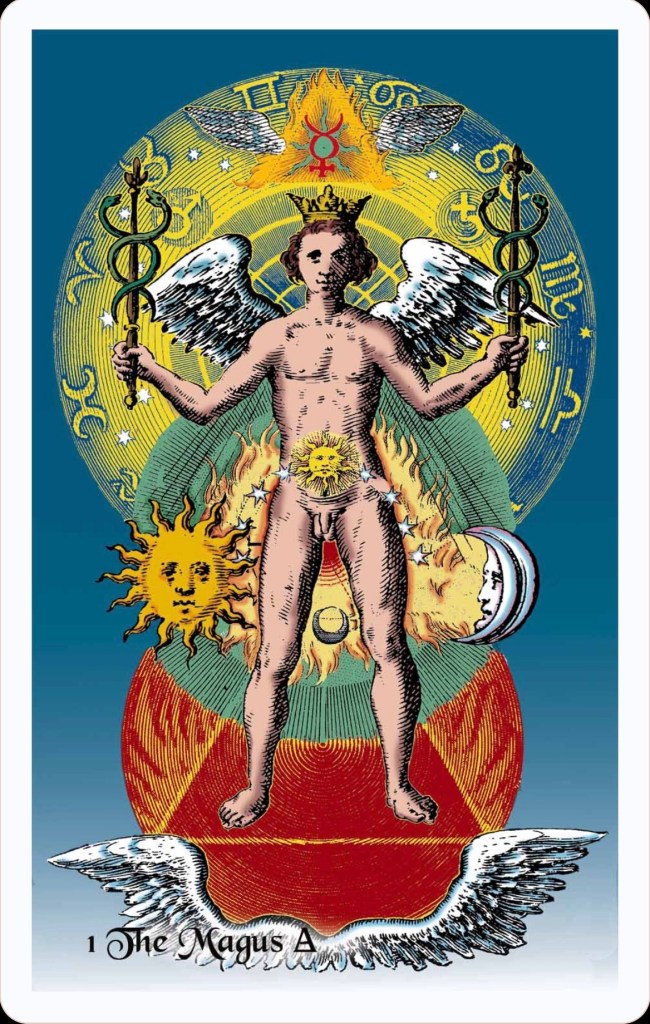
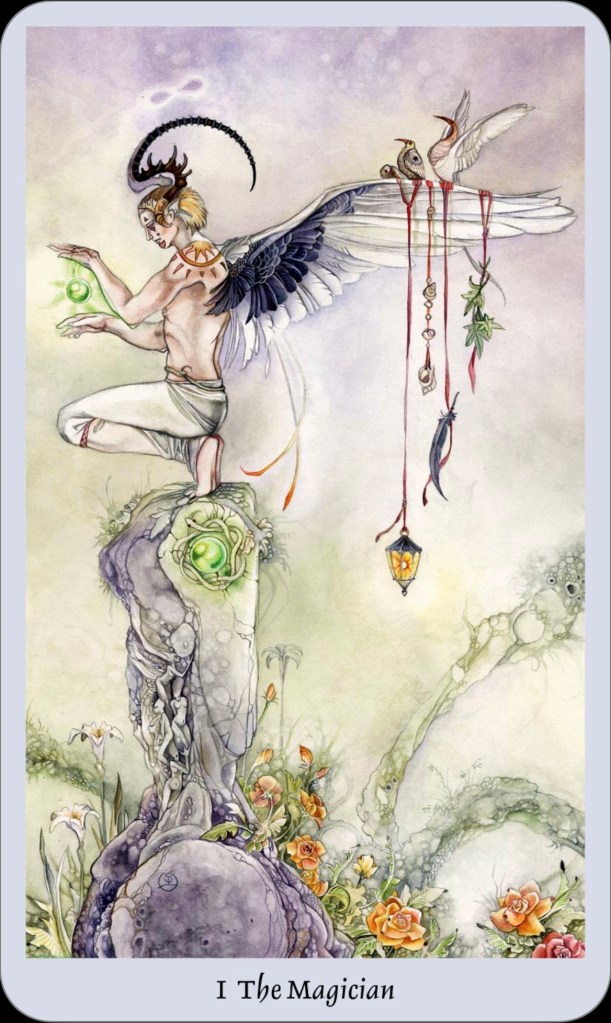
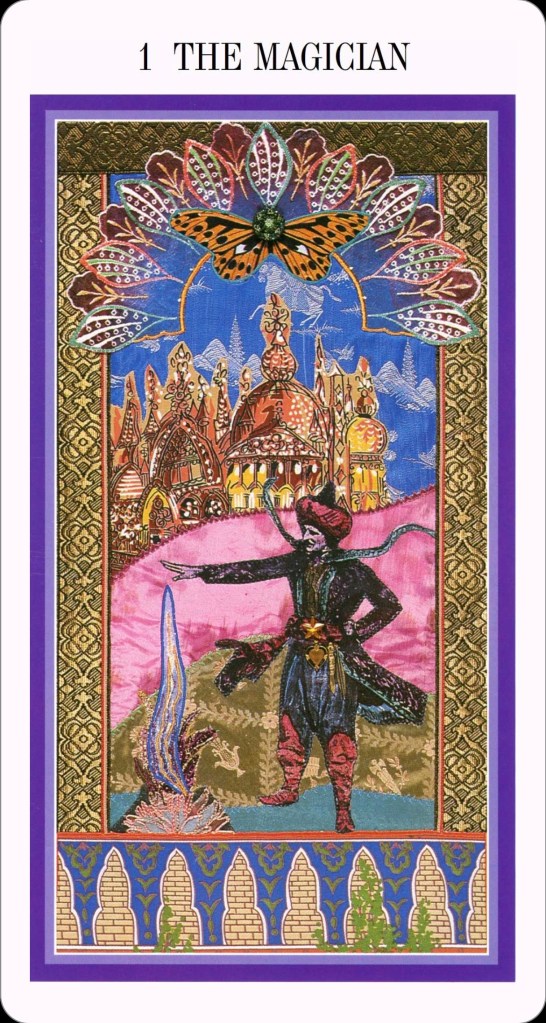
The mysterious stranger at the crossroads is another psychopomp variant—the figure who appears when the traveler must choose a path, offering guidance that is often riddled or ambiguous. Crossroads themselves are psychopomp spaces, places where worlds intersect and choices determine destinies. And we cannot forget the fairy godmothers, those magical patronesses who appear at crucial moments—at births, before balls, during transformations—to facilitate passage from one state to another. Cinderella’s fairy godmother doesn’t simply grant wishes; she guides her goddaughter through a transformative night that will change her life forever, providing the tools and wisdom needed for the journey.
Tarot’s Threshold Guardians: Psychopomps in the Cards
The tarot, that medieval system of symbols that has become a mirror for the psyche, contains several powerful psychopomp figures within its archetypal cast. The Hermit stands alone on a mountain peak, holding his lantern aloft in darkness. He is the guide through the dark night of the soul, the one who has walked the path before and now lights the way for others. His solitude is not loneliness but the necessary isolation of one who dwells between worlds, who has withdrawn from ordinary life to gain the wisdom needed to guide others through their own darkness.
The Death card, perhaps the most misunderstood in the deck, is the psychopomp par excellence. Despite its ominous name and skeletal imagery, Death in tarot represents the necessary ending that precedes new beginning. The figure of Death rides between the old and the new, facilitating the passage from what was to what will be. This is the psychopomp’s essential function: not to cause death or change, but to guide us through it, to ensure safe passage across the threshold.
The High Priestess sits at the threshold between the pillars of Boaz and Jachin, before the veil that separates the manifest from the hidden. She is the guardian of mysteries, the one who knows what lies beyond but reveals it only to those ready to cross. Her psychopomp nature is subtle—she doesn’t actively guide so much as she holds the space of transition, embodying the threshold itself. To pass her is to move from conscious to unconscious, from known to unknown. (Tarot decks pictured: Buckland Romani, Tabula Mundi.)
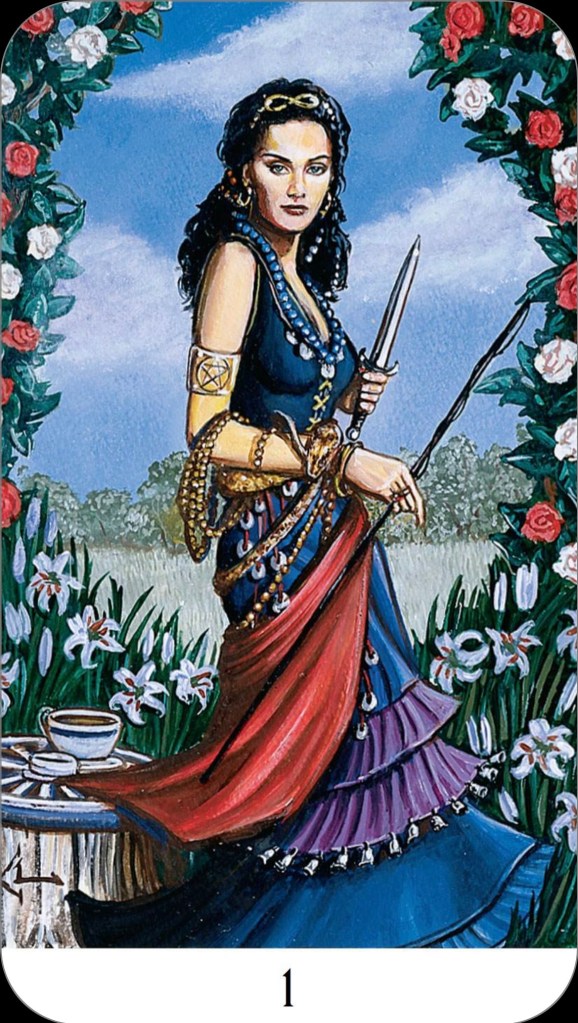
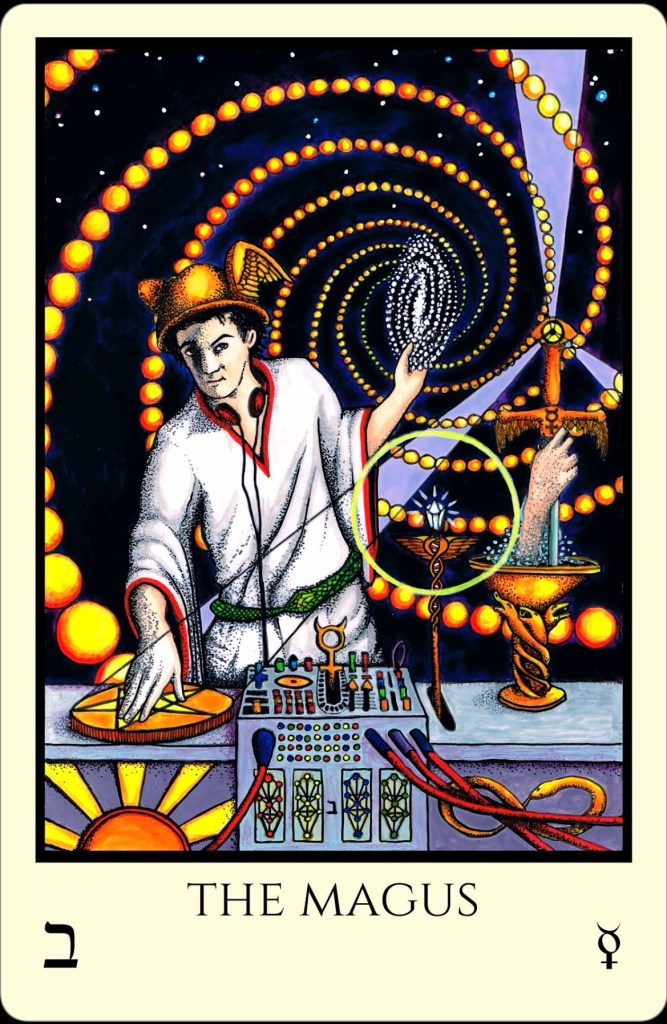
Temperance, with one foot on land and one in water, pouring liquid between vessels, is the mediator between opposites, the one who facilitates flow between realms. This angel figure guides us through the alchemical process of integration, helping us navigate the space between extremes, teaching us how to move fluidly between different states of being.
The Liminal Thread: Common Themes
What unites these diverse figures—from Hermes to Baba Yaga to the Hermit—is their essential liminality. They exist in threshold spaces: dawn and dusk, crossroads and doorways, the forest’s edge, the riverbank. They appear during transitions: births and deaths, marriages and initiations, journeys and transformations. They are neither here nor there, neither living nor dead, neither human nor divine, but something in between—and it is precisely this in-between nature that qualifies them to guide others through passages.
The psychopomp appears when we are lost, when we face the unknown, when we must cross from one state of being to another. They possess knowledge we lack—knowledge of the territory ahead, of the dangers and opportunities, of how to navigate what seems unnavigable. Often they are ambiguous figures, neither wholly benevolent nor malevolent, because transformation itself is ambiguous: it requires death of the old self, loss of what was familiar, courage to step into the unknown.
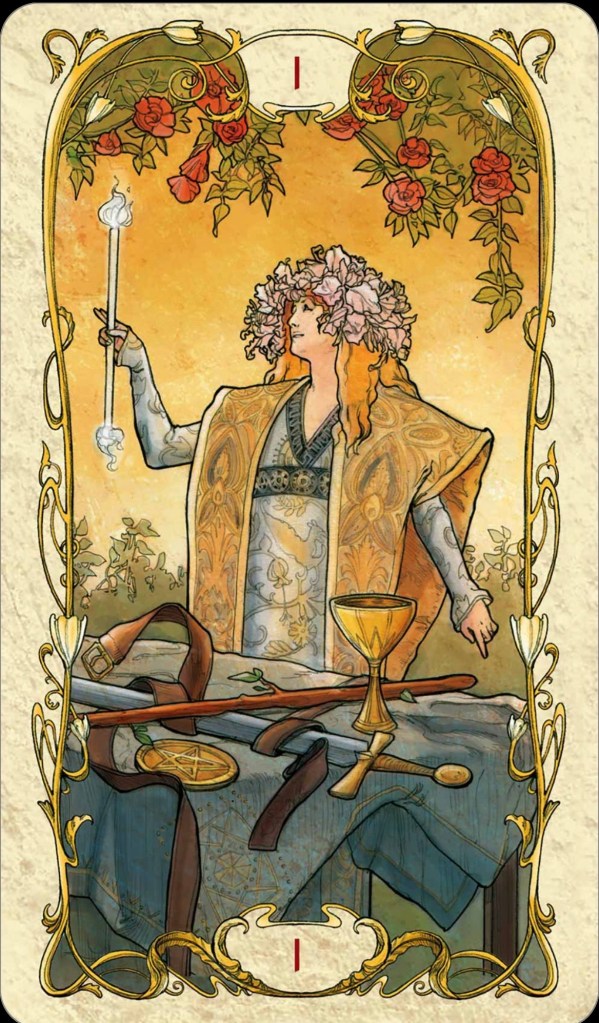
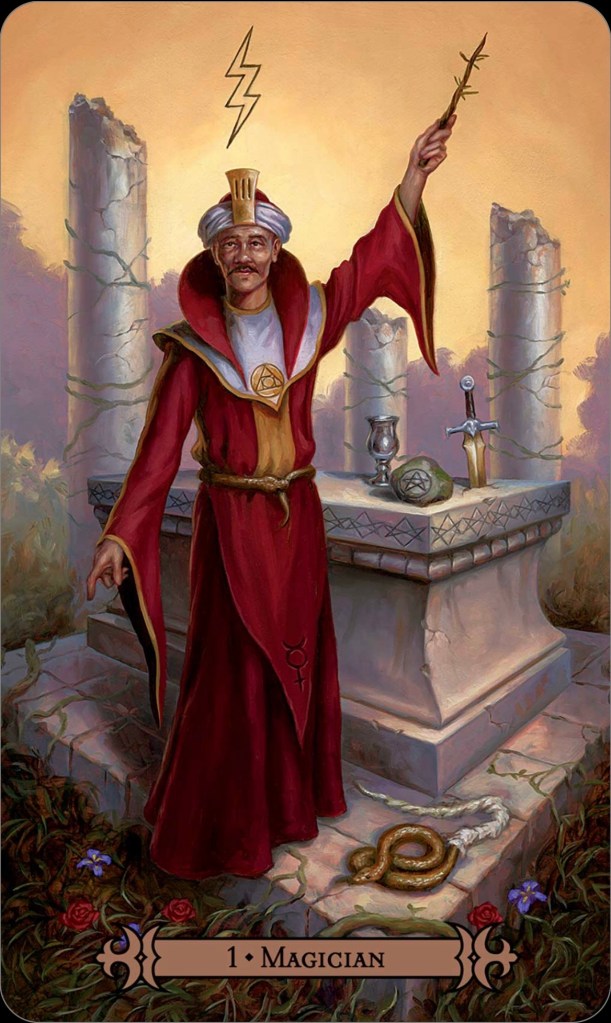
These guides rarely force or compel; instead, they offer, suggest, illuminate. They provide tools—Hermes’ caduceus, the fairy godmother’s wand, the Hermit’s lantern—but the journey remains ours to make. They appear when summoned by need, by readiness, by the soul’s deep call for guidance through transition. And crucially, they know both sides of the threshold: they have been where we are going, or they exist simultaneously in both realms, making them uniquely qualified to escort us across. (Tarot decks pictured: Mucha, Modern Spellcaster’s.)
Conclusion: Why We Need Guides Between Worlds
The psychopomp archetype endures across cultures and centuries because it addresses a fundamental human need: we require guidance through transitions, especially the most profound and frightening ones. Life is a series of thresholds—birth, adolescence, love, loss, aging, death—and at each threshold, we become, temporarily, lost souls in need of a guide. The psychopomp assures us that we need not cross alone, that there are figures who know the way, who have made this journey before or who exist specifically to facilitate such passages.
In our contemporary world, where traditional rites of passage have often dissolved, where we face transitions without ritual or guidance, the psychopomp archetype reminds us of what we’ve lost and what we still need. We still encounter these figures, though we may not name them as such: the therapist who guides us through psychological transformation, the mentor who helps us navigate career transitions, the friend who sits with us through grief, the book that appears at exactly the right moment with exactly the wisdom we need.
The psychopomp teaches us that transformation, while often frightening, is navigable; that thresholds, while disorienting, can be crossed; that we need not fear the journey between worlds because guides exist for precisely this purpose. In fairy tales, folklore, and tarot, these figures remind us that the path through darkness is a path nonetheless, that guides appear when we need them, and that the journey from one state of being to another, while it may feel like death, is also the only way to be reborn.
A Psychopomp Spread: Navigating the Threshold
When you find yourself at a crossroads, facing a transition that feels like standing at the edge of the known world, this spread can help you connect with psychopomp energy—the guidance that exists specifically to help souls cross from one state to another. Shuffle your deck with intention, asking for wisdom about the passage ahead.
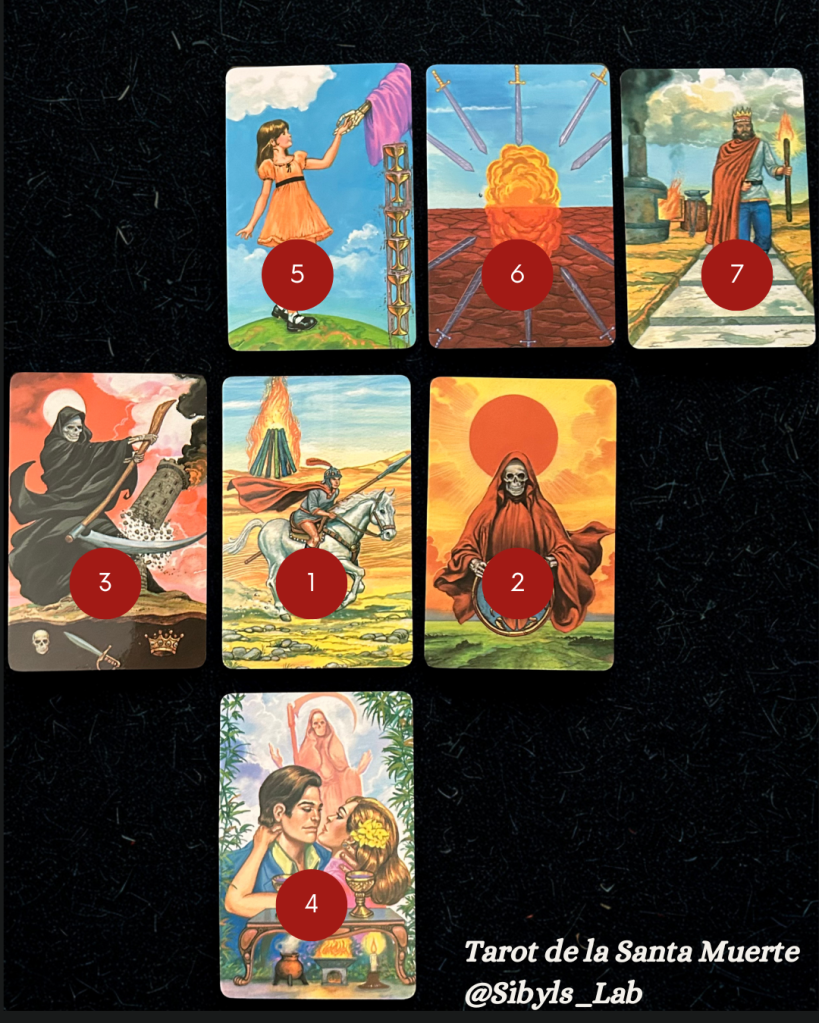
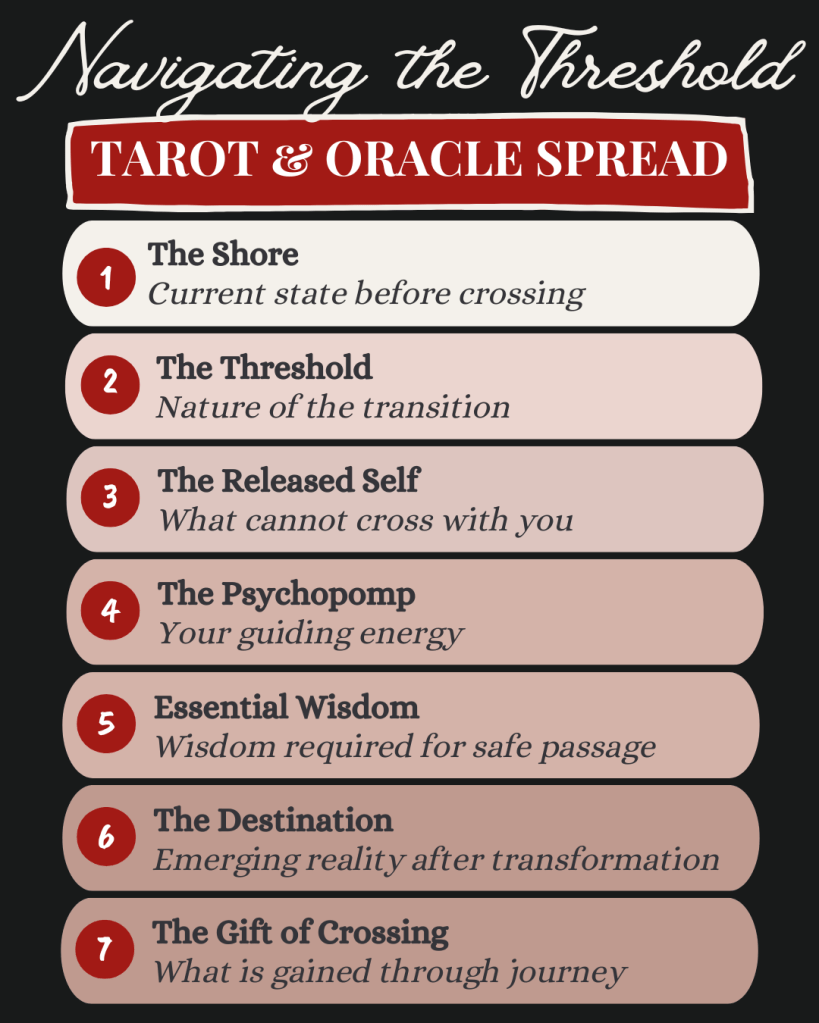
Position 1: The Shore — The shore you’re departing from; your current state before the crossing.
Position 2: The Threshold — The nature of the passage itself; what transition or transformation you face.
Position 3: The Released Self — The old self, beliefs, or attachments that cannot cross with you; what the journey requires you to release.
Position 4: The Psychopomp — The guide, wisdom, or energy that will escort you across; what is available to help you navigate this transition.
Position 5: Essential Wisdom — The knowledge or understanding required for safe passage; what you must learn or remember.
Position 6: The Destination — The far shore; what emerges on the other side of this transformation.
Position 7: The Gift of Crossing — What you gain by making this journey; how you will be transformed.
Lay the cards in a line, like stepping stones across a river, or arrange them as a path through darkness. Let the psychopomp figures in your deck—Death, the Hermit, the High Priestess, Temperance—speak with particular authority if they appear. Remember: the guide appears when the soul is ready to cross.

 Sibyl's Lab of Cartomantics
Leave a comment