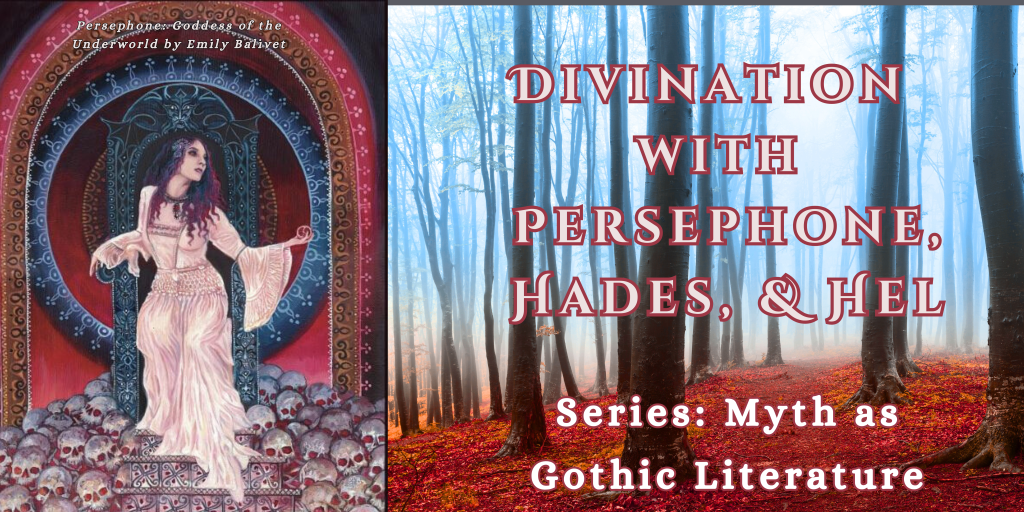
After last week’s fruitful (if I do say so myself) exploration of Frankenstein and the Gothic, I began wondering if and how this discussion might apply to a subject of longstanding interest on this blog: divination, mythology, and deity work. To revisit my previous reflections on the Gothic, check out this blog post and this YouTube video.
Perhaps you, too, are curious about how these two areas of discovery—divination and Gothic narrative, and divination and myth work—can complement one another. And yet, these linkages don’t require much contemplative stretching. Gothic literature has always drawn from the deepest wells of human mythology, finding in ancient deities the perfect embodiments of its most haunting themes. The brooding castles, tormented souls, and supernatural terrors that define the Gothic tradition echo the stories of gods and goddesses who ruled over death, darkness, madness, and forbidden knowledge. These divine figures aren’t merely historical curiosities—they represent the archetypal forces that Gothic writers have channeled for centuries, giving shape to our most profound fears and fascinations.
When we examine the pantheons of world mythology through a Gothic lens, we discover that the gods themselves were the original Gothic characters: complex, morally ambiguous, dwelling in liminal spaces between life and death, order and chaos, knowledge and madness. These deities personify the very essence of what makes Gothic literature so enduringly powerful and, because I love nothing so much as a blog series, this post will be the first of several highlighting these relevant examples in myth. As always, we’ll wrap up with a spread that applies these deities to themes of the Gothic.
Hades and Persephone: The Seductive Underworld
No divine couple better embodies the Gothic themes of captivity, forbidden desire, and the seductive pull of darkness than Hades and Persephone. Their myth reads like a prototype for countless Gothic narratives: the innocent maiden abducted into a dark realm, the brooding lord of an underground kingdom, and the transformation that occurs when light encounters absolute darkness. (Images from the Mythic Tarot.)
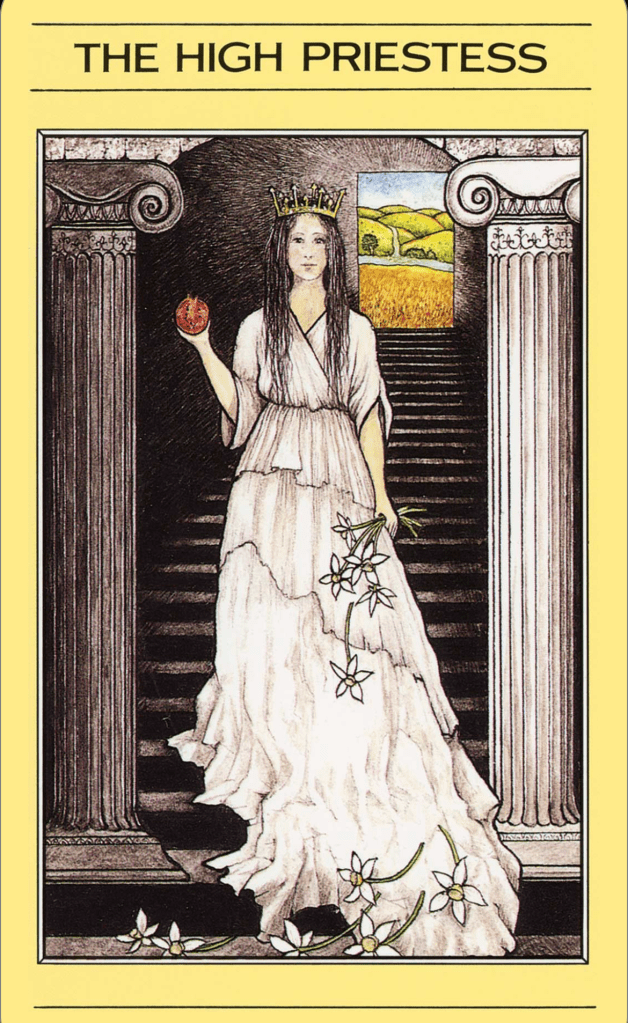
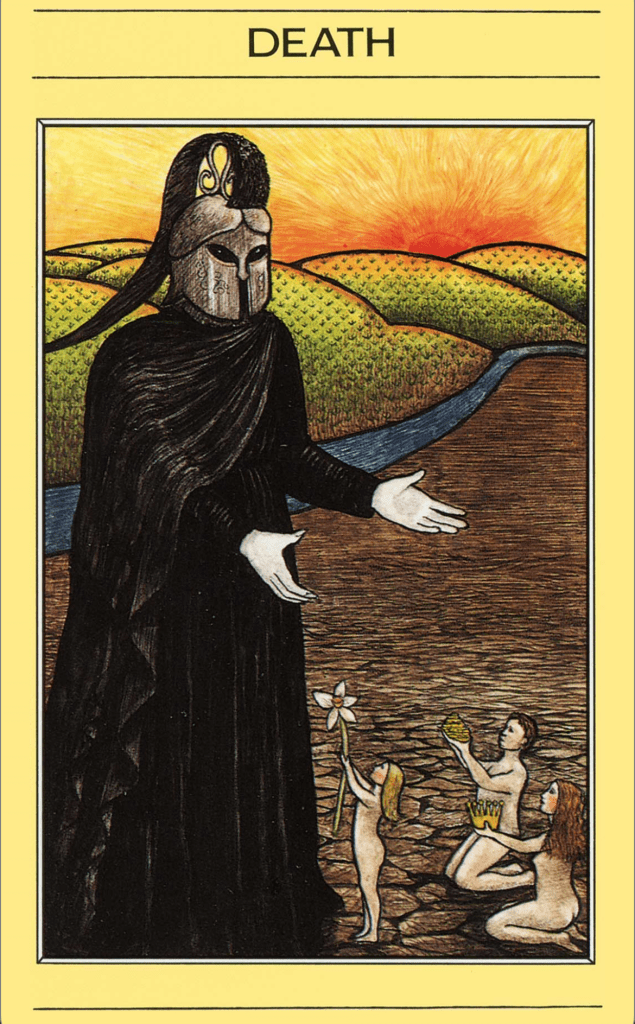
Hades, the Greek god of the underworld, rules over a realm that could have been designed by Gothic architects. His kingdom exists beneath the earth, a vast necropolis where the dead wander as shades, forever separated from the warmth of the living world. He is not evil in the traditional sense, but he is inexorably associated with death, isolation, and the inevitable fate that awaits all mortals. This moral ambiguity resonates deeply with Gothic literature’s rejection of simple binaries. The palace of Hades itself embodies Gothic architectural sensibilities: vast, echoing halls of stone, rivers that must be crossed to reach the realm of the dead, and gardens where strange, pale flowers bloom in eternal twilight—spaces that are simultaneously magnificent and terrifying.
Persephone’s story introduces the theme of transformation through darkness that runs throughout Gothic literature. Abducted from the sunlit fields, she is taken to the underworld against her will—a clear parallel to countless Gothic heroines trapped in forbidding estates. But her tale is more complex than simple captivity. By eating the pomegranate seeds, whether through trickery or her own agency, she binds herself to the underworld, becoming its queen. This transformation from Kore (the maiden) to Persephone (the dread queen) creates a figure of duality, spending half the year in the bright world above and half in the shadowed realm below. This liminality—existing between two worlds, belonging fully to neither—is quintessentially Gothic. She is simultaneously victim and queen, innocent and knowing, bringer of spring and ruler of the dead.
The relationship between Hades and Persephone represents the dangerous allure of the forbidden. Hades is the Byronic hero avant la lettre: powerful, isolated, misunderstood, dwelling in darkness yet capable of deep feeling. Persephone is drawn into his world and, rather than being destroyed by it, finds her own power there. Their love story exists outside conventional morality, transforming both parties in ways that can never be simple or uncomplicated. Gothic literature returns again and again to this dynamic—from Jane Eyre to Wuthering Heights—echoing Persephone’s discovery that darkness contains not just terror but also power, knowledge, and a strange kind of freedom.
Hel: The Beautiful Horror of Decay
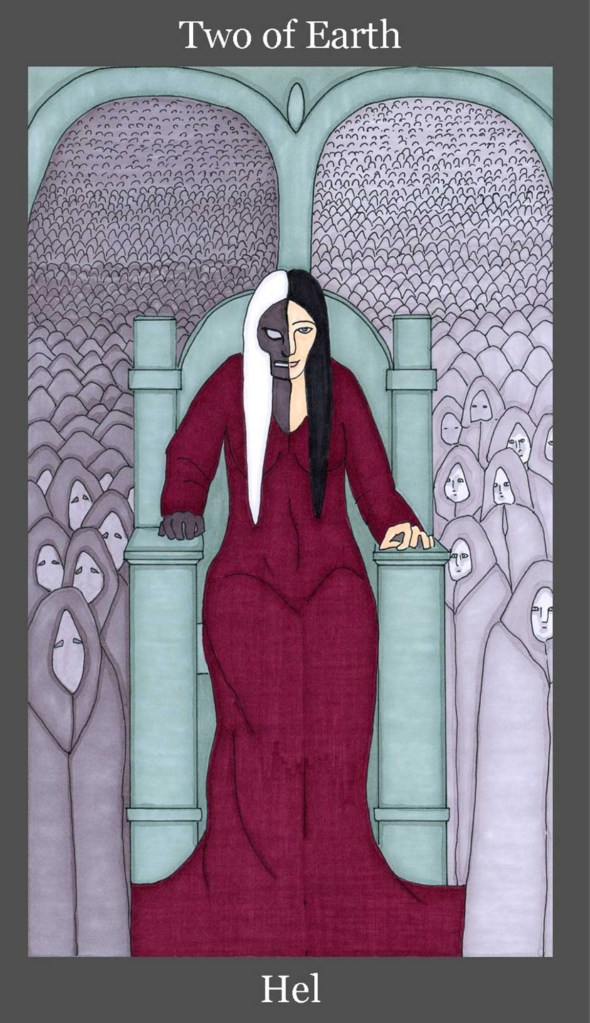
In Norse mythology, Hel rules over the cold, misty underworld where those who die of sickness or old age—rather than in glorious battle—spend their afterlife. Her appearance is itself Gothic: half alive and half dead, with one side of her body healthy and beautiful while the other is corpse-like and decaying. Her realm, also called Hel, is described as a cold, dark place surrounded by high walls and locked gates, with rivers to cross and guardians to pass. What makes Hel particularly Gothic is that her realm houses the unheroic dead—those who died in their beds, who succumbed to disease, who lived ordinary lives without glory. This afterlife of cold, gray monotony, rather than either heavenly reward or hellish punishment, is in some ways more terrifying than dramatic torment. (Image from Dark Goddess Tarot by Ellen Lorenzi-Prince.)
The most famous story involving Hel is the tale of Baldr, the beloved god killed through Loki’s trickery. When the gods beg Hel to release Baldr back to life, she agrees on one condition: that every living thing in the world must weep for him. All do except for one giantess (possibly Loki in disguise), and so Baldr must remain in Hel’s realm. This story embodies the Gothic theme of death’s irreversibility, the way the dead cannot truly return no matter how desperately the living wish for it. The tale also introduces the Gothic motif of the impossible condition—the task that seems achievable but contains a fatal flaw.
The cold of Hel’s realm is worth noting. While Christian hell is typically depicted as fire and heat, Hel’s underworld is characterized by cold, ice, and mist. This Norse vision has influenced Gothic literature’s use of cold as a symbol of death and horror—the chill in haunted houses, the cold touch of the supernatural, the way Gothic narratives often take place in winter or cold climates.
Conclusion: Mesmerized by the Divine Dark Descent
These deities, and those to be featured in this series in coming weeks, are shared for the ways in which they embody the themes that make Gothic literature so powerful and enduring: the inevitability of death, the allure of forbidden knowledge, the terror of transformation, the complexity of moral ambiguity, the power of the feminine divine, the weight of fate and judgment, the liminal spaces between worlds, and the dark beauty of destruction. When Gothic writers create their brooding heroes, their haunted heroines, their crumbling estates, and their supernatural terrors, they are channeling these ancient divine archetypes, giving them new forms for new ages.
As long as humans continue to fear death, to wonder about the afterlife, to be fascinated by darkness, to seek forbidden knowledge, and to grapple with forces beyond their control, Gothic literature will endure. And as long as Gothic literature endures, these ancient gods and goddesses will continue to haunt its pages, reminding us that the themes we explore in fiction are as old as human consciousness itself, as eternal as the darkness that falls at the end of every day and the death that awaits at the end of every life.
The Gothic Underworld Tarot Spread
For those who wish to explore their own descent into transformative darkness, this tarot spread draws upon the mythic journeys of Hades, Persephone, and Hel. It maps the terrain of personal underworlds—those necessary descents that strip away the superficial and reveal hidden truths.

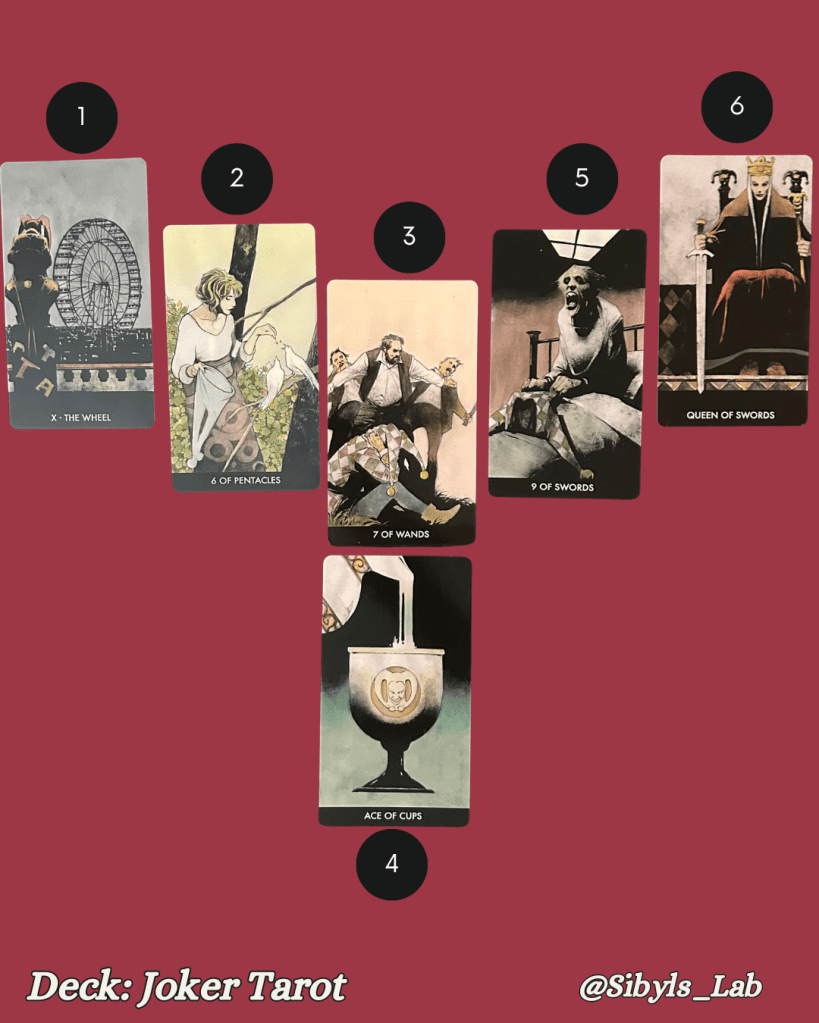
Position 1: The Threshold (Hades’ Gate) — What boundary are you crossing, or what transition calls to you? This card reveals the liminal space you currently occupy, the gateway between your known world and the darkness that beckons.
Position 2: The Abduction (Persephone’s Descent) — What force or circumstance has pulled you into this transformative space? This position illuminates whether your descent is chosen or imposed, and what power dynamics are at play.
Position 3: The Hidden Riches (Hades’ Wealth) — What treasures lie buried in your darkness? This card uncovers the unexpected gifts, knowledge, or power that can only be found by going beneath the surface.
Position 4: The Transformation (Persephone’s Pomegranate) — How are you being fundamentally changed by this experience? This reveals the irreversible shift occurring within you—what you are becoming through your time in shadow.
Position 5: The Cold Beauty (Hel’s Realm) — What truth about decay, endings, or mortality must you accept? This position confronts you with the inevitable, the unchangeable, and the strange beauty found in acknowledging what cannot be altered.
Position 6: The Return (The Ascent) — What will you carry back to the world above? This final card shows how your underworld journey will manifest in your everyday life, and what wisdom or power you bring from the depths.

 Sibyl's Lab of Cartomantics
Leave a comment