
The human psyche is instinctively drawn to stories—those timeless narratives that speak to something deeper than our conscious minds can readily grasp. Fairy tales and folklore, passed down through generations, carry within them archetypal wisdom that resonates with our innermost experiences, fears, and desires. When we combine this ancient storytelling tradition with the symbolic language of tarot, we create a powerful framework for inner child healing that speaks directly to the wounded parts of ourselves that often remain hidden beneath layers of adult conditioning and protective mechanisms.
Inner child work, a therapeutic approach that focuses on healing childhood wounds and reconnecting with our authentic selves, finds a natural companion in both tarot and fairy tale symbolism. The inner child represents not just our past experiences as children, but the part of us that remains curious, creative, vulnerable, and open to wonder. This aspect of ourselves often carries both our deepest wounds and our greatest capacity for joy and healing. When trauma, neglect, or simply the natural process of growing up in an imperfect world creates barriers between us and this essential part of ourselves, we may find ourselves feeling disconnected, emotionally numb, or struggling with patterns that seem to repeat despite our best conscious efforts to change them.
Understanding the Inner Child Through Story
Every fairy tale begins with a disruption to the natural order—a death, an abandonment, a curse, or some form of loss that sets the protagonist on their journey. This mirrors the experience of the inner child, who often carries wounds from moments when their sense of safety, love, or belonging was disrupted. The fairy tale protagonist must then navigate challenges, face fears, and ultimately transform in order to reach their happy ending. This journey of transformation is precisely what inner child healing entails.
Consider the story of Cinderella, one of the most widely known fairy tales across cultures. At its core, this is a story about a child who loses her primary caregiver (her mother) and finds herself in an environment where she is not valued, seen, or loved for who she truly is. She is forced to hide her authentic self and take on roles that don’t reflect her true nature. The magical transformation that allows her to attend the ball represents the moment when the inner child is finally allowed to emerge and be seen in all her beauty and worth.
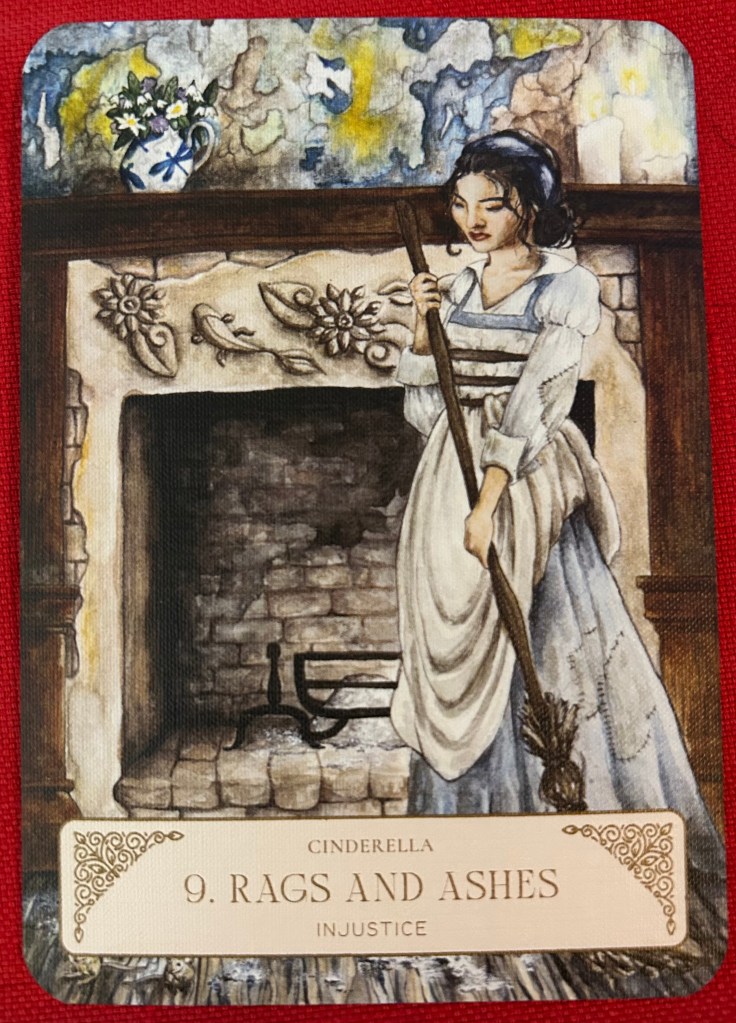

When we use tarot to explore our own Cinderella story, we might draw cards to represent different aspects of this narrative: What does the “death of the mother” represent in our lives—what early loss or disappointment shaped our sense of self? What are the “stepsisters and stepmother”—the critical voices, both internal and external, that tell us we’re not good enough? Where is our “fairy godmother”—the source of magic and support that can help us transform? What is our “glass slipper”—the unique gift or quality that makes us irreplaceable?
The story of Hansel and Gretel speaks to different wounds—the fear of abandonment, the experience of being led into danger by those who should protect us, and the need to develop our own inner resources for survival. The breadcrumbs that are eaten by birds represent failed attempts at finding our way back to safety, while the gingerbread house symbolizes the seductive but ultimately dangerous substitutes we might seek when our real needs aren’t met. The witch represents the devouring aspect of unhealed trauma that can consume us if we don’t find the strength to fight back.
Using tarot to explore a Hansel and Gretel narrative might involve drawing cards to understand: What was the “famine” in our childhood—the scarcity of love, attention, or resources that led to our abandonment? What are the “breadcrumbs”—the strategies we developed to try to find our way back to safety that ultimately failed us? What is our “gingerbread house”—the seemingly sweet but ultimately harmful coping mechanisms we’ve developed? How can we access our inner “Gretel”—the wise, resourceful part of ourselves that can outwit the forces that seek to harm us?
The Fairy Tale Tarot & Oracle Spread: A Framework for Exploration
One powerful way to combine tarot with fairy tale wisdom for inner child work is through a specialized spread that follows the archetypal structure of fairy tales. This spread can be adapted for any fairy tale that resonates with your experience, but here’s a foundational framework that captures the essential elements of most fairy tale narratives.
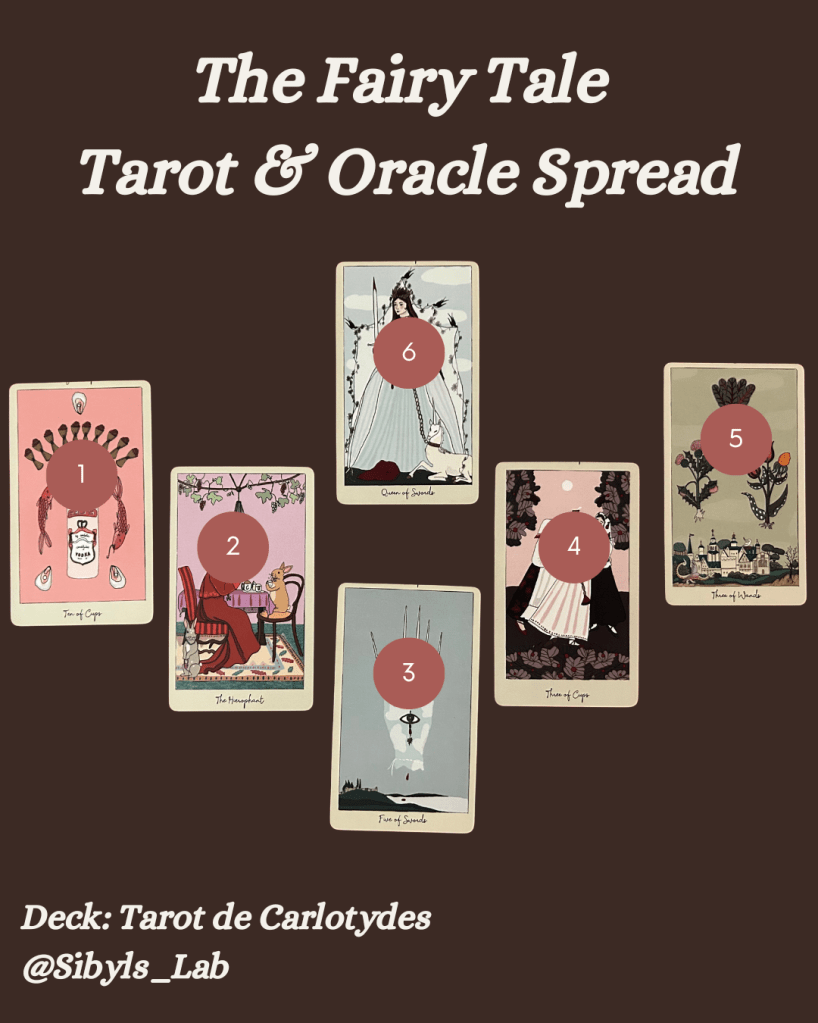
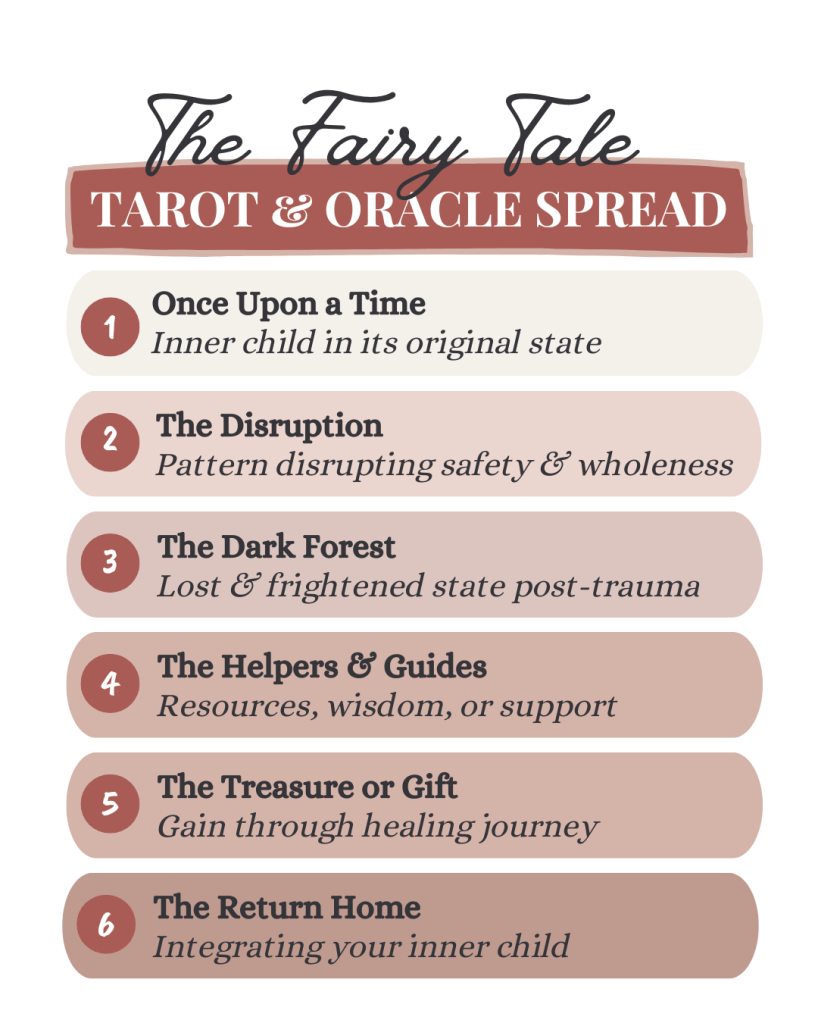
Position 1: Once Upon a Time
This card represents your inner child in their original state—before the wounds, before the protective mechanisms, before the story of struggle began. This is the essence of who you were meant to be, your authentic self in its purest form. Pay attention to the qualities, gifts, and natural inclinations this card reveals.
Position 2: The Disruption
This card represents the event, pattern, or experience that disrupted your inner child’s sense of safety and wholeness. This might be a specific traumatic event, but it could also represent ongoing patterns of neglect, criticism, or emotional unavailability. This card helps you understand the nature of the wound that set your healing journey in motion.
Position 3: The Dark Forest
This card represents the confused, lost, or frightened state that followed the disruption. This is the psychological landscape your inner child has been navigating—the fears, limiting beliefs, and survival strategies that developed in response to the wound. This card often reveals the internal obstacles that keep you stuck in old patterns.
Position 4: The Helpers and Guides
This card represents the resources, wisdom, or support that is available to help your inner child heal and grow. This might be internal resources like intuition, creativity, or resilience, or external support like therapy, spiritual practice, or loving relationships. Sometimes this card reveals helpers you haven’t yet recognized or fully utilized.
Position 5: The Treasure or Gift
This card represents what your inner child gains through the healing journey—not just the resolution of the wound, but the gifts that emerge through the process of healing. Often our greatest wounds become the source of our greatest wisdom, compassion, and strength.
Position 6: The Return Home
This card represents the integration of the healing—how your healed inner child can be welcomed back into your adult life, bringing their gifts, wisdom, and authentic energy into your present experience.
When working with this spread, spend time with each card not just intellectually, but emotionally and intuitively. Notice what feelings arise as you look at each image. What memories surface? What body sensations do you experience? The cards are not just providing information—they’re creating a space for your inner child to communicate through symbol, emotion, and intuition.
Working with Specific Fairy Tale Archetypes
Different fairy tales speak to different types of childhood wounds and healing journeys. By identifying which fairy tale most closely mirrors your experience, you can use tarot to explore that specific archetypal pattern more deeply.
The Cinderella Archetype: Healing from Invisibility and Unworthiness
The Cinderella story speaks to those who grew up feeling invisible, unvalued, or forced to hide their true selves to survive. This archetype often develops in families where love was conditional, where the child had to earn approval through service or perfection, or where their authentic self was criticized or rejected.
When working with the Cinderella archetype through tarot, pay special attention to cards that represent hidden beauty, transformation, and recognition. The High Priestess might represent the hidden wisdom and intuition that was forced underground. The Star could symbolize the hope that sustained you through difficult times. The Empress might represent the nurturing mother energy that was missing and that you’re learning to provide for yourself.
A specific Cinderella spread might include positions for: The Lost Mother (what nurturing energy was missing), The Stepfamily (the critical voices that made you feel unworthy), The Ashes (how you learned to hide your light), The Fairy Godmother (the magic that can transform your situation), The Ball (where you can shine authentically), The Glass Slipper (your unique gifts that make you irreplaceable), and The Prince (the part of yourself or life that recognizes and values your true worth).
The Sleeping Beauty Archetype: Awakening from Numbness and Disconnection
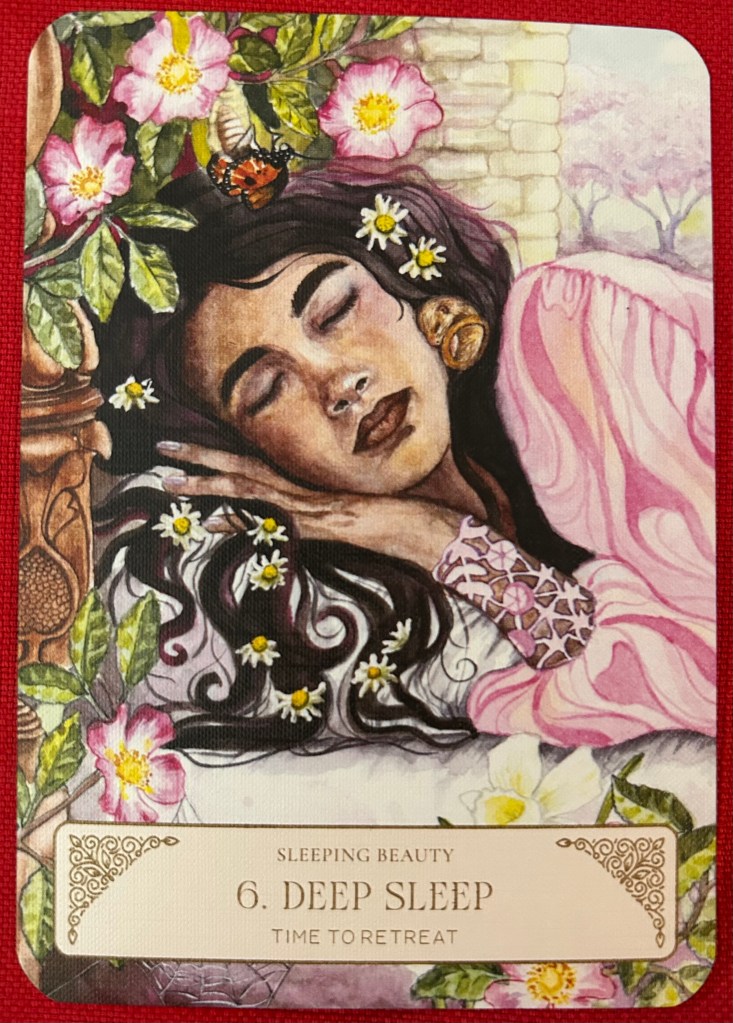
Sleeping Beauty speaks to those who learned to protect themselves by going to sleep emotionally—shutting down their feelings, desires, or life force to avoid pain. This archetype often develops in response to overwhelming experiences or environments where it wasn’t safe to be fully alive and present.
Cards that often appear in Sleeping Beauty work include the Hanged Man (the suspended state), the Four of Swords (withdrawal and rest), and the Judgement card (the awakening call). The spinning wheel that causes the sleep might be represented by cards like the Wheel of Fortune (fate or patterns beyond our control) or the Devil (addictive or compulsive behaviors that numb us).
A Sleeping Beauty spread might explore: The Curse (what caused you to shut down), The Spinning Wheel (the trigger or pattern that maintains the numbness), The Deep Sleep (what you’ve been avoiding or protecting yourself from), The Thorny Forest (the barriers that keep others from reaching you), The Prince’s Kiss (what can awaken you to life again), and The Awakening (how to safely return to full aliveness).
The Little Red Riding Hood Archetype: Reclaiming Power and Intuition
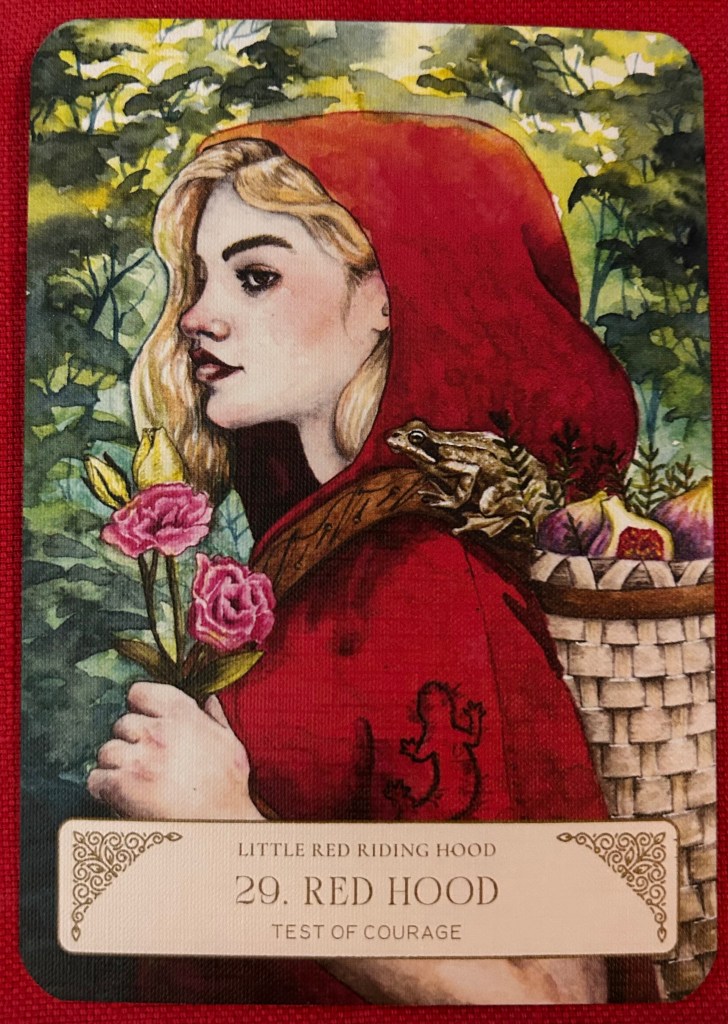
This story speaks to those who learned not to trust their instincts, who were taught to be “nice” even when their inner wisdom warned them of danger. It’s about reclaiming the ability to sense what’s safe and what isn’t, and learning to protect yourself without losing your essential goodness and openness.
The Wolf in this story often represents predatory energy—people or situations that seem safe on the surface but are actually harmful. The Grandmother represents wisdom and protection, while the Huntsman represents the fierce protector energy that can rescue us when we’re in over our heads.
Tarot cards that often appear in Little Red Riding Hood work include the Moon (intuition and hidden dangers), Strength (the power to face the wolf), and the Hermit (the wisdom to navigate safely through the dark forest of life).
The Ugly Duckling Archetype: Finding Your True Family and Identity
This story speaks to those who grew up feeling fundamentally different, wrong, or like they didn’t belong. It’s about the journey of discovering that what made you feel like an outsider is actually what makes you special, and finding your true tribe—the people who see and celebrate your authentic nature.
The Ugly Duckling archetype often involves cards like the Five of Pentacles (feeling left out in the cold), the Hermit (the solitary journey of self-discovery), and the Sun (the joy of finally being seen and accepted for who you truly are).
The Ongoing Journey
Inner child work through fairy tales and tarot is not a destination but a lifelong journey of deepening self-understanding and healing. As you grow and change, different fairy tales may become relevant, and different aspects of familiar stories may reveal new layers of meaning.
The goal is not to “fix” your inner child or to eliminate all traces of childhood wounds, but to develop a loving, conscious relationship with this essential part of yourself. Your inner child’s sensitivity, creativity, and capacity for wonder are not problems to be solved but gifts to be treasured and integrated into your adult life.
As you continue this work, you may find that your relationship with fairy tales themselves evolves. Stories that once seemed simple or superficial may reveal profound wisdom, while tales that initially felt foreign or irrelevant may suddenly speak directly to your experience. This is part of the magic of working with archetypal material—it continues to unfold and reveal new layers of meaning as we grow in wisdom and self-understanding.
The combination of tarot and fairy tale wisdom offers a unique pathway to inner child healing that honors both the rational and intuitive aspects of the psyche. By working with these powerful symbolic languages, we can access parts of ourselves that might remain hidden through purely analytical approaches, while still maintaining the structure and guidance that helps us navigate the healing process safely.
Remember that this work is sacred—you are tending to the most vulnerable and precious parts of yourself with the wisdom of ages past and the insight of archetypal symbols. Approach it with reverence, patience, and deep compassion for the brave child within you who is ready to heal and grow.
Your inner child’s story matters. Your healing matters. And through the ancient wisdom of fairy tales and the symbolic guidance of tarot, you have powerful allies in creating a life of authenticity, joy, and wholeness.

 Sibyl's Lab of Cartomantics
Leave a comment