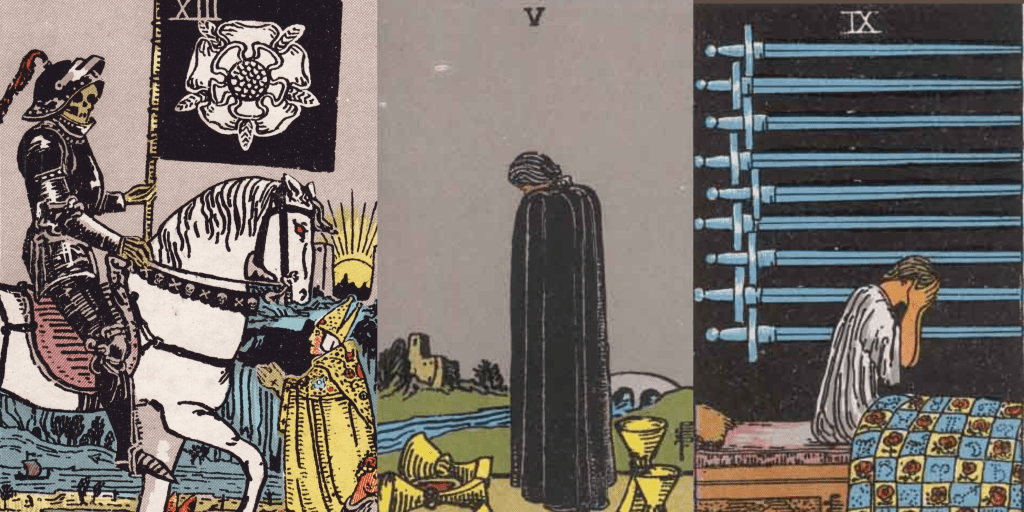
Grief is one of life’s most profound and disorienting experiences. Whether you’re mourning the loss of a loved one, the end of a relationship, a career change, or any significant life transition, the emotional landscape can feel overwhelming and impossible to navigate. In these moments of deep sorrow and confusion, many people seek tools that can offer comfort, clarity, and a sense of connection to something greater than their immediate pain.
For those of us who enjoy a card reading by themselves or someone else, tarot can serve as a powerful companion during the grieving process. Rather than predicting the future, tarot cards function as mirrors that reflect our inner wisdom, helping us process complex emotions and find meaning in our experiences. The archetypal images and symbols in tarot speak to universal human experiences, including loss, transformation, and renewal.
Why Tarot Can Be Healing During Grief
When we’re grieving, our usual coping mechanisms and rational thinking patterns can feel inadequate. Grief operates on an emotional and spiritual level that often defies logic. Tarot works in this same intuitive realm, offering a language of symbols and metaphors that can help us articulate feelings we might not otherwise be able to express.
The cards don’t provide easy answers or quick fixes, but they do offer something equally valuable: a structured way to sit with our pain and explore it safely. Each card reading becomes a sacred space where we can honor our feelings without judgment and begin to see patterns or possibilities we might have missed while caught in the immediate intensity of loss.
Tarot also reminds us that we’re part of a larger human story. The cards depict universal themes of love, loss, struggle, and triumph that connect us to countless others who have walked similar paths. This sense of connection can be profoundly comforting when grief makes us feel isolated and alone.
How to Begin Using Tarot for Grief Work
Starting a tarot practice during grief doesn’t require extensive knowledge of card meanings or complex spreads. The most important element is approaching the cards with openness and self-compassion. Begin by creating a quiet, comfortable space where you feel safe to explore your emotions. Light a candle, play soft music, or include any other elements that bring you peace. Are your mourning a person or circumstance? Bring an item representative of that subject to your space.
Choose a deck that resonates with you visually and emotionally. Some people prefer traditional RWS imagery, while others are drawn to more contemporary or themed decks. Trust your intuition—the right deck will feel welcoming and supportive.
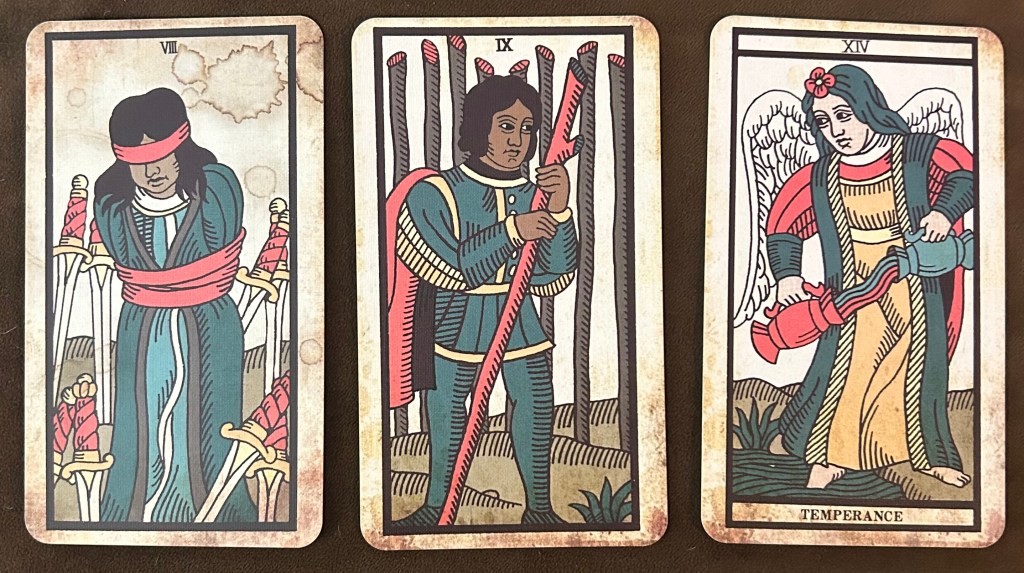
Start with simple, single-card pulls rather than elaborate spreads. Have a discussion with your deck, one card at a time:
- What is the shape of my grief? 8 of Swords – I feel trapped in this thought cycle.
- What would disrupt these thoughts, so that I can take rests between moments of grief? 9 of Wands – Boundaries are essential right now. I don’t have energy or attention to spare for other people’s “stuff” and it’s okay to communicate this.
- How do I go about setting these boundaries? Temperance – Agree to check in with loved ones periodically and regularly so they are assured that I’m safe and well, and then give myself permission to retreat again. Going fully inward, without sending an “I’m hanging in there” text every three days, will increase the likelihood that others will encroach on my space.
The conversation can continue any way I’d like for as long as I’d like, offering a chance for some self-dialogue at a moment when grief increases the impulse to retreat from social engagement. Don’t hesitate to explore specific grief-focused questions as they emerge naturally. You might ask about honoring a loved one’s memory, understanding a particular emotion you’re experiencing, or finding strength for the day ahead. Remember that the cards are tools for self-reflection, not external authorities—your own insights and feelings are always the most important part of any reading.
Choosing the Right Deck for Grief Work
The deck you choose for grief work can significantly impact your healing experience. Unlike reading for entertainment or general guidance, grief work requires a deck that feels emotionally safe and supportive during vulnerable moments.
Consider the Imagery and Tone
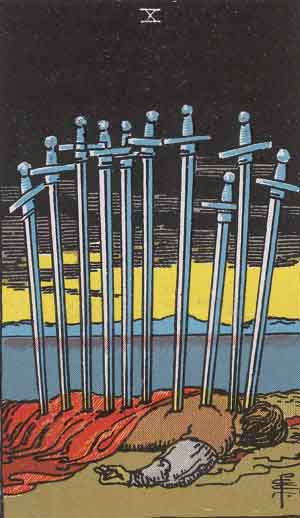
Look for decks with gentle, nurturing artwork rather than stark or frightening imagery. While traditional decks like the Rider-Waite-Smith are excellent for learning, some people find certain cards (like the Ten of Swords or the Devil) too intense when they’re already emotionally fragile. Decks with softer color palettes and more compassionate interpretations of difficult cards can provide the same wisdom without additional emotional overwhelm.
Evaluate the Guidebook and Card Meanings
Pay attention to how the deck’s creator approaches challenging themes. Some decks reframe traditionally “negative” cards in more empowering ways, which can be particularly helpful when you’re already dealing with loss. Look for guidebooks that acknowledge pain while offering hope and practical wisdom for moving through difficult emotions.
Trust Your Intuitive Response
When browsing decks, notice your immediate emotional reaction. Does the artwork make you feel held and understood, or does it create additional anxiety? Your grieving heart often knows what it needs before your mind does. If a deck makes you feel slightly more peaceful just by looking at it, that’s a powerful sign. Here are a few examples of decks that I’ve found especially suited to this work, tonally and creatively.
Tarot Decks for Grief:
Black Violet Tarot by Heidi Phelps
Future Ancestor Tarot by Lexa Luna
Gentle Tarot by Mari in the Sky
Hide Tarot by Dan Francis
Ink Witch Tarot by Eric Maille
RainShadow Tarot by Claire Mack

Tarot Spread: Navigating Grief
This simple spread offers a gentle framework for exploring your grief without overwhelming yourself with too many cards or complex positions. Draw three cards and place them in a row from left to right.

Card 1: What I’m Carrying
This position represents the emotions, memories, or burdens you’re currently holding. It might reveal unexpressed anger, deep sadness, guilt, or even unexpected relief. Whatever appears here deserves acknowledgment without judgment. This card validates your experience and reminds you that all feelings within grief are natural and necessary.
Card 2: What Seeks to Heal
The middle card points toward the healing energy available to you right now. This might be an internal resource you’ve forgotten you possess, support from others, a spiritual practice, or simply permission to rest. Sometimes this card reveals that healing looks different than expected—perhaps it’s about accepting help rather than being strong, or finding meaning in small daily rituals.
Card 3: How to Honor and Move Forward
The final card offers guidance on carrying your love and memories forward while still allowing yourself to grow and change. This isn’t about “getting over” your loss but about integrating it into your continuing life story. The card might suggest ways to memorialize your loved one, creative outlets for your emotions, or gentle steps toward rebuilding your sense of purpose.
Working with Your Reading
After laying out the cards, spend time with each image before consulting any guidebook meanings. What emotions arise? What details in the artwork catch your attention? Your personal response to the cards is more important than traditional interpretations.
Consider returning to this same three-card pull weekly or monthly, noticing how the messages shift as you move through different phases of your grief journey. Keep a journal of these readings—over time, you’ll likely see patterns and progress that weren’t visible in individual moments of pain.
NOTE: For a personal account of grief and tarot practice, check out “Embrace Your Rituals: How Tarot and Poetry Helped Me Heal My Grief” by Annie Freshwater

 Sibyl's Lab of Cartomantics
Leave a comment