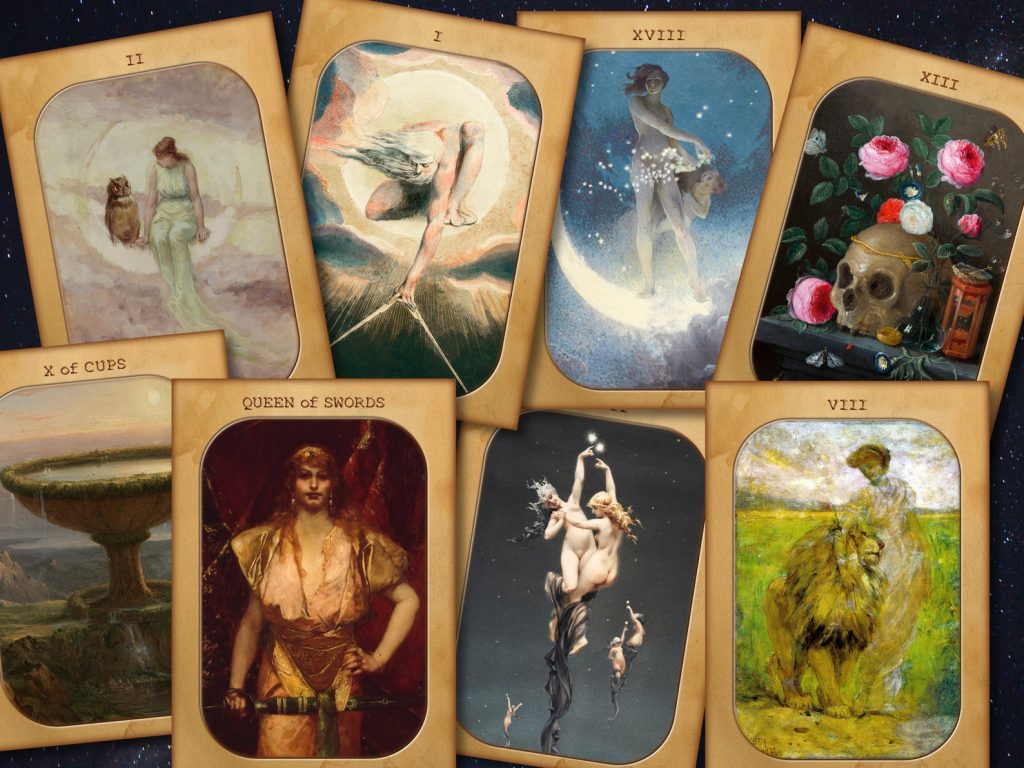
There is a modest but delightful community of divination-lovers on YouTube, fondly known as TarotTube. And like any self-respecting social media subculture, we communicate across the platform by way of tags. The latest of these, #WhatMadeMeDoIt, introduced by @DragonflyDilly, offers a list of simple prompts, all answering the question: What made you acquire that divination deck?
Over here at the Lab, we recorded our own lengthy response to the original video which, with both handmaidens at the mic, added up to a total of 20 beautiful and bizarre decks. Rest assured that it was fun to film, and is even more fun to watch, so head over to our YouTube channel to listen to us gab and show pretty cards.
However, there’s more to muse about, and so here we are. Sibyl has made me aware of the shocking fact that some people are lukewarm about tarot and oracle cards, perhaps enamored, perhaps confounded. Some people, it turns out, haven’t yet “done” any deck buying of any kind. And for those people–with a cold-footed attraction to the divination arts–there’s a more basic question: Why do it–acquire tarot, meditate on oracle, and gaze at a whole gaggle of cardboard pictures–in the first place?
If you don’t love visual art in some way, shape, or form, I don’t have a compelling argument (at least, not in this post). But for those who are mesmerized or compelled or made curious by artistic expression, I’ve got a few powerful arguments (if Sibyl does say so herself). What are they, you ask? Read on and find out. (And as a reward for making your way to the end, you’ll find a delicious card spread to put your preferred tarot or oracle deck to work.)
In the spirit of irony, and despite being inspired by a piece of tantalizing web content, let’s start with a frank criticism of the digital landscape. In our hyperconnected yet spiritually fragmented world, our souls often find themselves starved amid abundance. We consume information voraciously while remaining malnourished at our core, scrolling through feeds that satisfy neither our deepest longings nor our innate need for something greater than ourselves.
Visual art offers a profound antidote to this existential hunger—serving as both mirror and gateway to our inner landscapes. Among the most accessible and potent forms of this nourishment are tarot and oracle decks, which marry exquisite imagery with archetypal wisdom to create transformative instruments of self-discovery and spiritual growth.
The Primordial Power of Symbol and Form
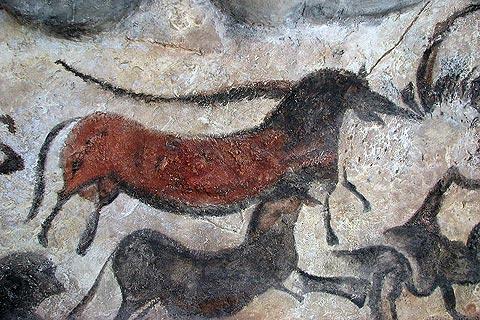
The relationship between visual expression and human consciousness goes back further than written language itself. From Paleolithic cave paintings to contemporary digital masterpieces, we’ve consistently turned to visual symbols as a way of understanding both ourselves and the cosmos around us.
Art operates in a pre-verbal realm, bypassing rational analysis to speak directly to our intuitive faculties. This immediacy gives visual expression unique access to psychological territories that might otherwise remain unexplored—bringing unconscious material into conscious awareness where it can be integrated and transformed.
When we truly engage with visual art, we activate what psychologists call “aesthetic experience”—a heightened state of perception that actually reduces cortisol levels, enhances our capacity for empathy, and cultivates neuroplasticity. This contemplative state offers profound respite from mental noise while simultaneously enriching our inner architecture.
Tarot and Oracle as Living Canvas
Tarot and oracle decks go beyond static artistic observation by demanding active participation. Each card functions as a miniature masterpiece, carefully crafted to embody specific energetic frequencies through deliberate choices of color, composition, and symbolic content.
The visual language of traditional tarot draws from centuries of esoteric knowledge while embracing contemporary artistic innovation. Consider the Rider-Waite-Smith deck’s enduring power: Pamela Colman Smith’s watercolor illustrations transform archetypal concepts into emotionally resonant imagery. The Fool’s yellow sky suggests infinite possibility, while The High Priestess sits between pillars of duality, her flowing robes echoing the veils between conscious and unconscious realms.
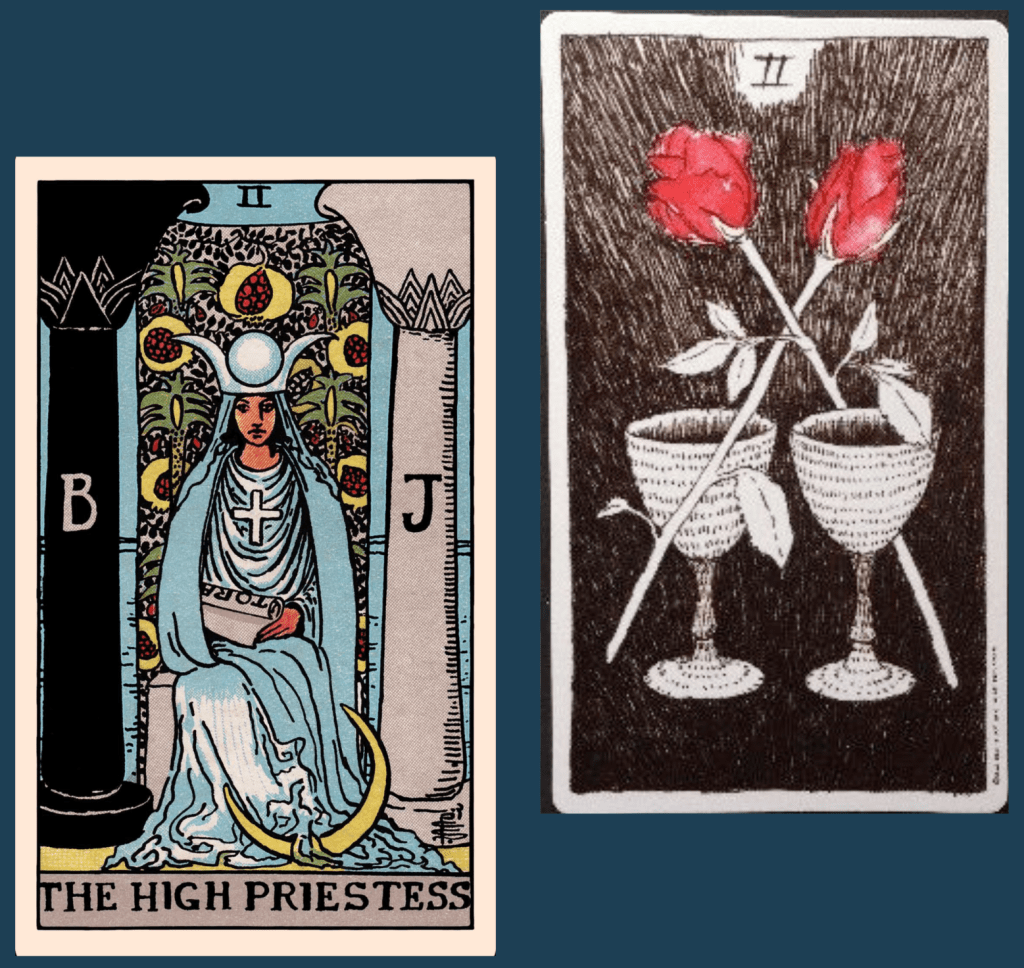
Modern interpretations like the Wild Unknown Tarot by Kim Krans show how contemporary artistry can breathe new life into ancient symbols. Krans’s minimalist ink drawings and muted palette create an entirely different energetic signature—her Two of Cups features two swans forming a heart shape, distilling partnership’s essence into pure visual poetry.
Oracle decks exponentially expand this symbolic vocabulary. Rebecca Campbell’s Work Your Light Oracle combines ethereal photography with cosmic imagery, while Colette Baron-Reid’s Wisdom of the Oracle employs rich, fantastical illustrations that feel like portals to other dimensions. Each deck’s artistic approach—whether photographic, painted, or digitally rendered—creates distinct energetic resonances that speak to different aspects of human experience.
The Depths of Visual Encounter
Working with cards engages multiple levels of visual processing at once. Initial encounters register as pure aesthetic experience—an immediate, gut-level response to color harmonies, compositional dynamics, and overall energetic impression.
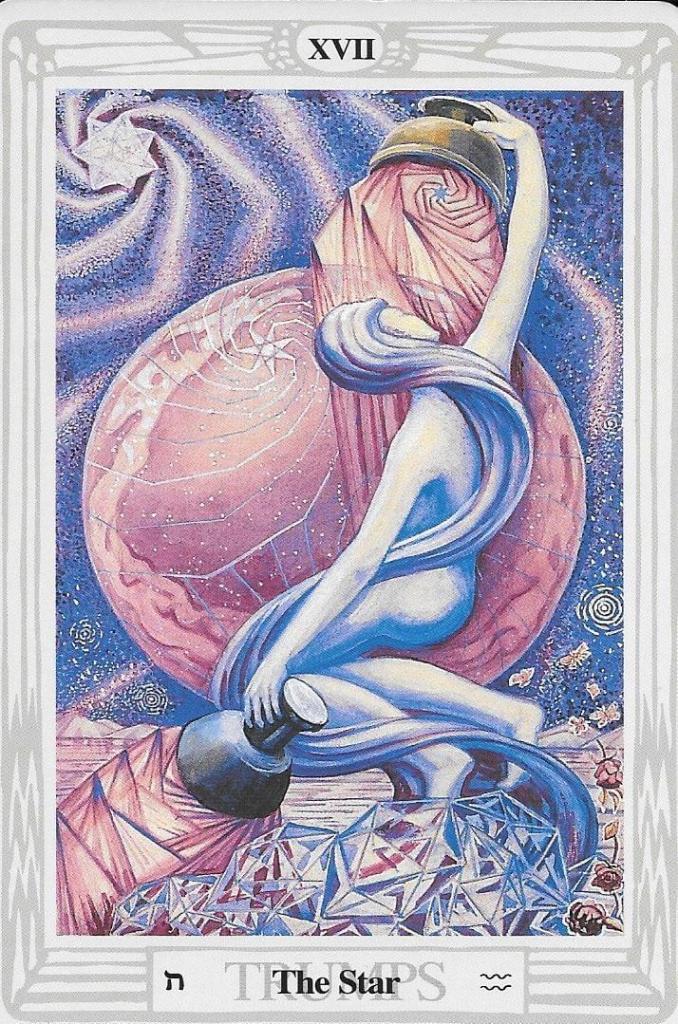
Consider drawing The Star card from the Thoth Tarot: Frieda Harris’s luminous blues and violets immediately evoke tranquility before any symbolic interpretation begins. These instant reactions carry real diagnostic value, as our unconscious minds excel at processing symbolic information below the threshold of awareness.
Then we move into analytical interpretation, examining symbolic elements and their potential relevance to current circumstances. In that same Star card, we might notice the seven-pointed star, the water being poured, the Egyptian goddess Nuit arched overhead—each element adding layers of meaning that speak to hope, renewal, and cosmic connection.
The artistic quality of the cards themselves profoundly influences their effectiveness as transformative tools. Compare the gentle watercolors of the Dreaming Way Tarot with the bold, graphic energy of the Modern Witch Tarot—each style invites different depths of engagement and reflection.
Visual Fluency and Aesthetic Sensitivity
Regular practice with visually sophisticated decks naturally develops our capacity for symbolic interpretation and aesthetic appreciation. Working with diverse artistic styles—from the Pre-Raphaelite romanticism of the Victorian Romantic Tarot to the stark geometric beauty of the Fountain Tarot—expands our visual vocabulary and interpretive flexibility.
Daily card practices establish rhythms of aesthetic contemplation that gradually reorient consciousness toward beauty-seeking and meaning-making. Drawing a single card from the Earthbound Oracle each morning, for instance, might attune us to nature’s subtle seasonal shifts through Jill Pyle’s evocative botanical photography.
The meditative quality inherent in visual contemplation activates our relaxation response, promoting physiological calm while simultaneously enhancing creative cognitive processes. When we allow ourselves to truly absorb the intricate details of a card like The Hierophant in the Golden Dawn Tarot—noting each symbolic element, color choice, and compositional decision—we enter states of receptive awareness that are inherently healing and revelatory.
Art as Creative Catalyst
Many practitioners discover that card work awakens dormant creative impulses, inspiring personal artistic exploration as both expressive outlet and spiritual practice. The rich imagery encountered in decks like Oracle of the 7 Energies or the Sacred Geometry Oracle serves as catalyst for individual creative investigation, whether through traditional media or contemporary digital platforms.
Creating personal oracle cards provides deeply intimate tools for reflection and guidance. You might photograph meaningful objects, combine them with personal affirmations, and create a deck that speaks directly to your unique spiritual journey. This marriage of visual creation with spiritual practice offers unique psychological benefits, generating what Csikszentmihalyi identifies as “flow state”—that condition of complete absorption where boundaries between self and activity dissolve.
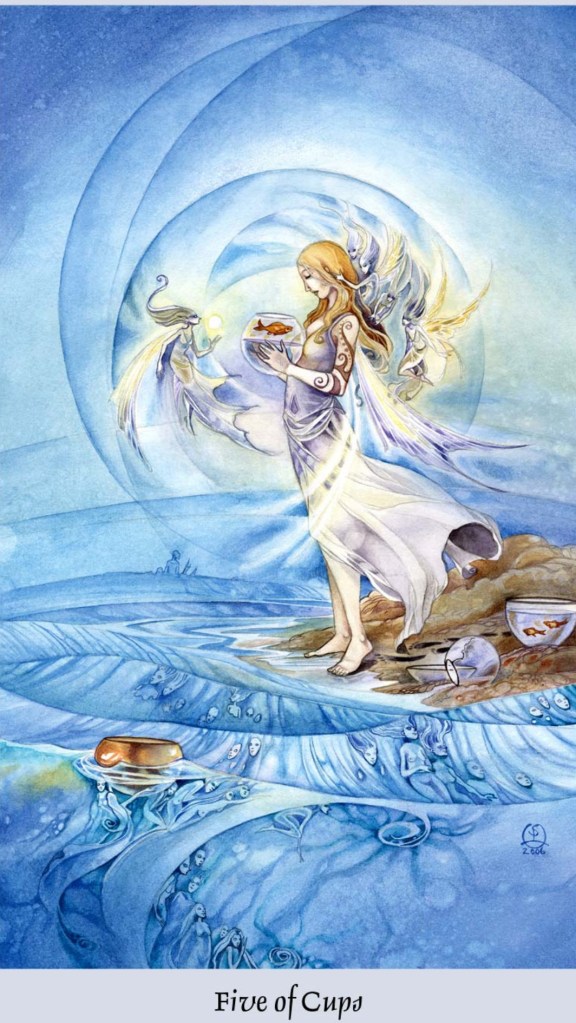
Visual arts provide alternative languages for processing experiences that resist verbal articulation. When emotions feel overwhelming, the swirling blues and purples of a card like the Five of Cups from the Shadowscapes Tarot might offer a visual metaphor that helps us understand and integrate difficult feelings in ways that words simply cannot capture.
Art as Bridge Between Worlds
Shared engagement with visual art through study groups, creative workshops, and online communities creates opportunities for both individual growth and collective healing. Participating in a group exploration of culturally diverse decks—such as the Afro-Brazilian Tarot, the Native American Oracle, or the Japanese-inspired Ukiyoe Tarot—reveals how personal encounters with beauty and meaning are simultaneously unique and universal.
Digital platforms have democratized access to diverse artistic traditions, making it possible to encounter imagery from artists worldwide. We might discover the ethereal digital art of the Starseed Oracle, the shamanic photography of the Earth Magic Oracle, or the mandala-inspired geometry of the Sacred Geometry Oracle—each offering unique windows into different cultural approaches to expressing spiritual truths through visual art.

Working with culturally diverse imagery challenges aesthetic assumptions and broadens interpretive frameworks. The vibrant colors and bold patterns of the African American Tarot offer entirely different energetic signatures than the muted earth tones of the Gaian Tarot, helping us develop more inclusive understanding of beauty and spiritual expression.
Integration Through Reflection and Practice
Journaling about visual experiences bridges aesthetic and verbal processing, creating more complete integration of insights arising from artistic encounters. Writing about why the flowing watercolors of The Dreaming Way Tarot evoke particular emotions, or how the sharp geometries of the Prisma Visions Tarot affect our energy, helps articulate and embody the often-subtle communications received through visual engagement.
The portability of card decks makes aesthetic experience accessible regardless of location or circumstance. Carrying a compact deck like the Mini Tarot or the pocket-sized version of the Wild Unknown allows us to weave contemplative practices into daily life, creating ongoing opportunities for reflection and spiritual connection.
Regular engagement with visual beauty gradually increases our capacity for aesthetic appreciation and emotional sensitivity. We become more attuned to the subtle differences between the mystical blues of the Cosmic Tarot and the earthy greens of the Herbal Tarot, more responsive to symbolic content, and more aware of how visual elements influence our energetic and emotional states.
The transformative power of sustained visual art engagement lies not merely in isolated moments of beauty or insight, but in the cumulative effect of consistent aesthetic practice. When we regularly create space for visual contemplation—whether through daily draws from the Wisdom of Avalon Oracle or weekly deep dives into the intricate symbolism of the Hermetic Tarot—consciousness gradually shifts toward greater appreciation, enhanced sensitivity, and deeper connection to the world’s inherent beauty and meaning.
This fundamental reorientation toward wonder and reverence represents perhaps visual art’s greatest gift to human consciousness—a transformation in how we perceive and experience existence itself.
Conclusion
Engaging with visual art through tarot, oracle decks, and broader artistic practice offers an essential pathway to psychological and spiritual nourishment that our contemporary world desperately needs. Whether we’re drawn to the classical elegance of the Marseille Tarot, the nature-based wisdom of the Earth Magic Oracle, or the cosmic expansiveness of the Moonology Oracle, these practices combine immediate aesthetic pleasure with profound symbolic wisdom.
Visual arts address fundamental human needs that can’t be satisfied through purely intellectual or material pursuits. In an era that prioritizes efficiency over beauty and information over wisdom, aesthetic contemplation becomes an act of cultural resistance and spiritual necessity.
By consciously engaging with visual beauty and symbolic content—whether through Kim Krans’s minimalist artistry, Rebecca Campbell’s celestial photography, or the timeless symbols of traditional tarot—we not only enhance personal well-being but contribute to a more aesthetically conscious and meaningful world.
The invitation remains constant across all traditions and practices: open yourself to beauty, allow imagery to communicate with your deepest self, and discover the profound nourishment available through authentic engagement with visual art’s transformative power. In doing so, you join an ancient lineage of seekers who have discovered in art not mere decoration, but a sacred language, a pathway to transcendence, and an inexhaustible source of renewal and wonder.
Bonus Spread: How Art Can Feed Your Soul
This five-card spread explores the relationship between visual expression and spiritual nourishment, offering guidance for deepening your artistic practice as a pathway to inner fulfillment.
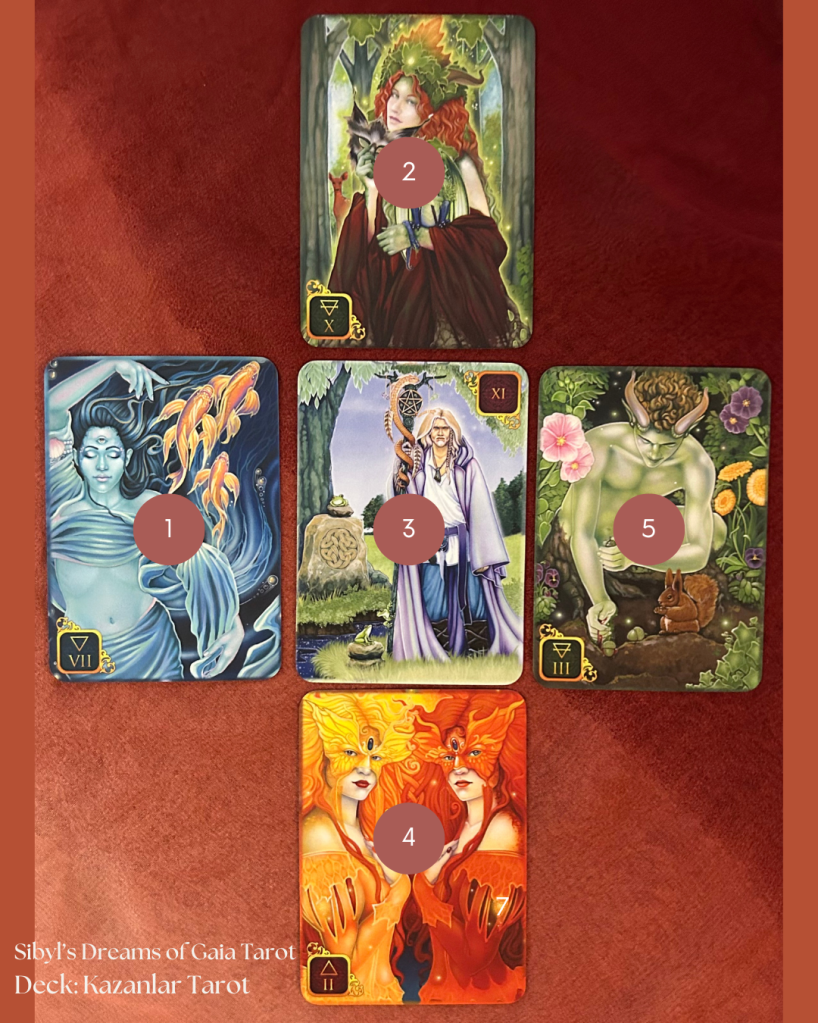
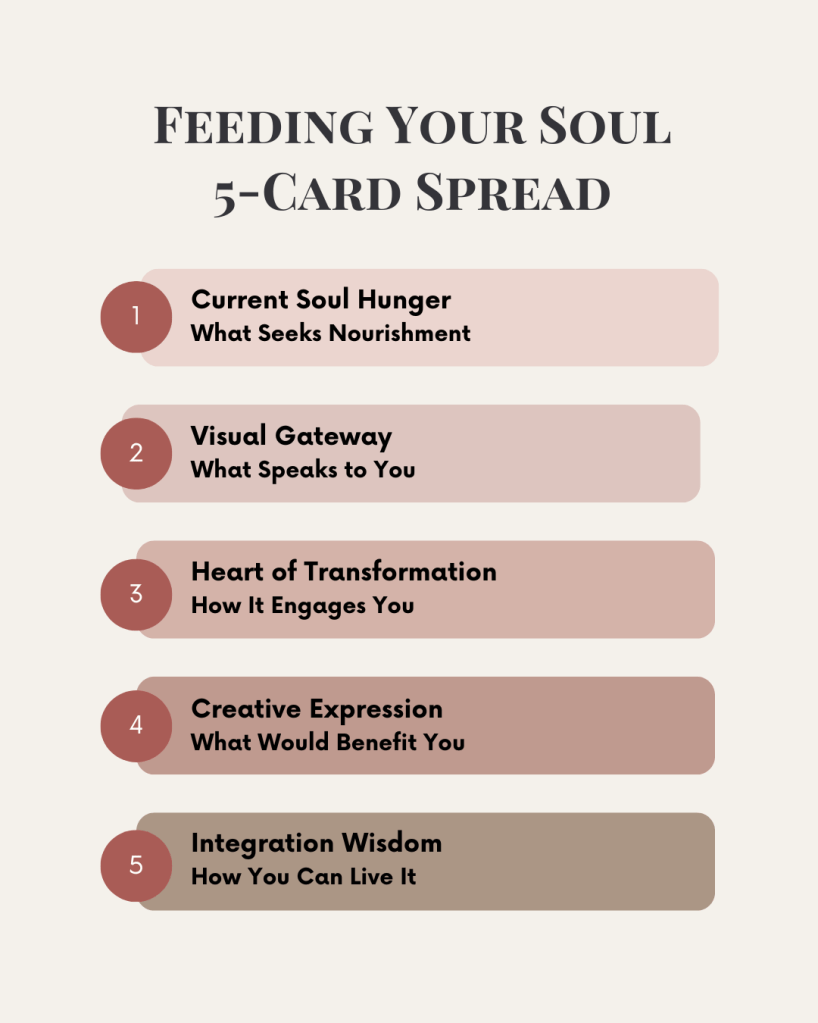
Card Positions:
1. Current Soul Hunger – What aspect of your inner life is seeking nourishment right now?
2. Visual Gateway – What type of visual art or imagery most wants to speak to you at this moment?
3. Heart of Transformation – How can engaging with visual beauty transform your current spiritual landscape?
4. Creative Expression – What form of artistic creation or aesthetic practice would most benefit your soul’s growth?
5. Integration Wisdom – How can you weave this visual nourishment into your daily life for sustained spiritual feeding?
Working with the Spread:
Begin by selecting a deck whose artwork resonates with your current aesthetic sensibilities—perhaps the ethereal imagery of the Starseed Oracle for cosmic connection, or the nature-based wisdom of the Wild Unknown for earthy grounding.
As you lay each card, allow yourself to respond first to the pure visual impact before moving into interpretation. Notice which colors draw your attention, what symbols feel most alive, how the overall composition speaks to your current emotional state.
The interplay between cards often reveals the most profound insights. How does the imagery in your “Visual Gateway” card (position 2) relate to the creative expression suggested in position 4? What visual elements connect your “Current Soul Hunger” with your “Integration Wisdom”?
This spread works beautifully as a monthly practice, helping you attune to the ever-evolving relationship between your inner landscape and the visual nourishment that can most effectively feed your soul’s current needs.

 Sibyl's Lab of Cartomantics
Leave a comment